

What a Cold Chain 3PL Actually Does
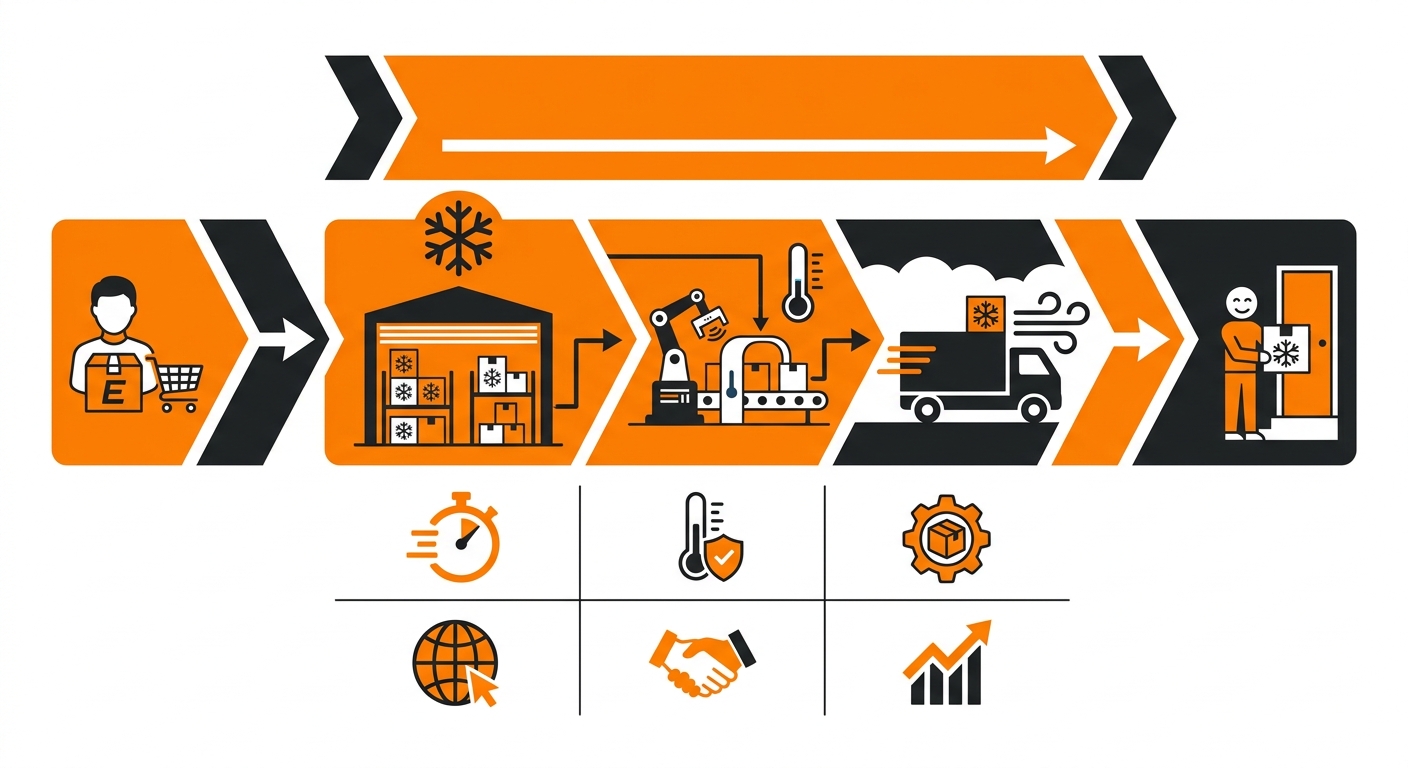
A cold chain 3PL is a third-party logistics provider that stores, picks, packs, and ships temperature-sensitive products inside a continuously monitored, controlled-temperature environment from the moment inventory arrives at the warehouse to the moment it reaches the end customer.
The defining word here is continuously. It’s not enough to store products cold if the shipping leg breaks the temperature window. A qualified provider maintains that controlled environment across every handoff: receiving dock, storage, pick-and-pack station, and last-mile carrier handoff.
What “Cold Chain” Actually Covers
Cold chain operations must maintain temperature-controlled storage environments for products that require refrigeration or freezing.
-
Refrigerated: 35°F–46°F, commonly used for perishable foods, beverages, and certain biologics
Frozen: -4°F to 0°F, required for frozen meals, specialty ingredients, and some pharmaceuticals
Each zone requires dedicated infrastructure, trained staff, and documented temperature monitoring to maintain product integrity.
How a Cold Chain 3PL Works
Here’s how a cold chain 3PL works:
Inbound receiving and temperature verification
When your products arrive at the facility, staff scan each pallet or case into the warehouse management system (WMS) and immediately record the product’s internal temperature against your specified range. Any shipment that arrives outside tolerance gets quarantined before it touches inventory, not after.
Slotted cold storage assignment
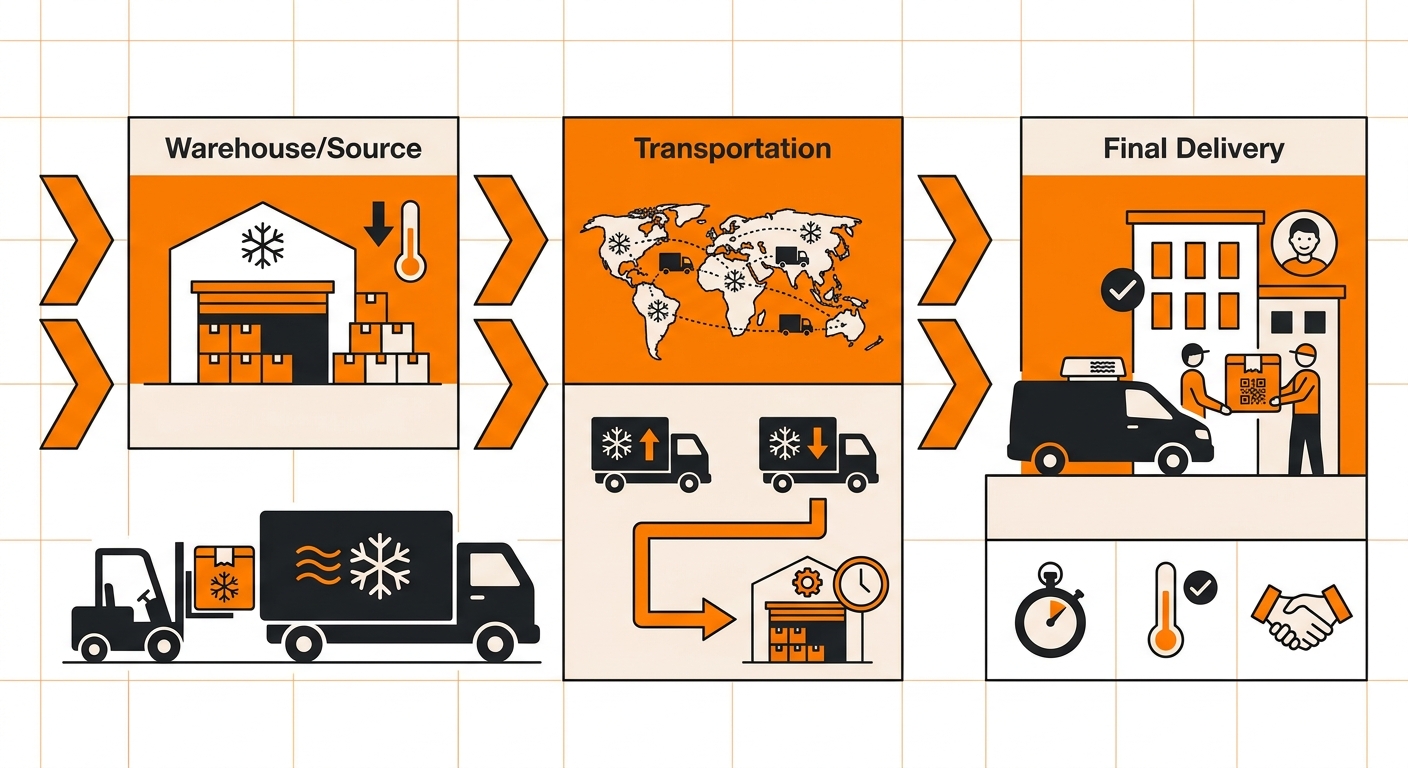
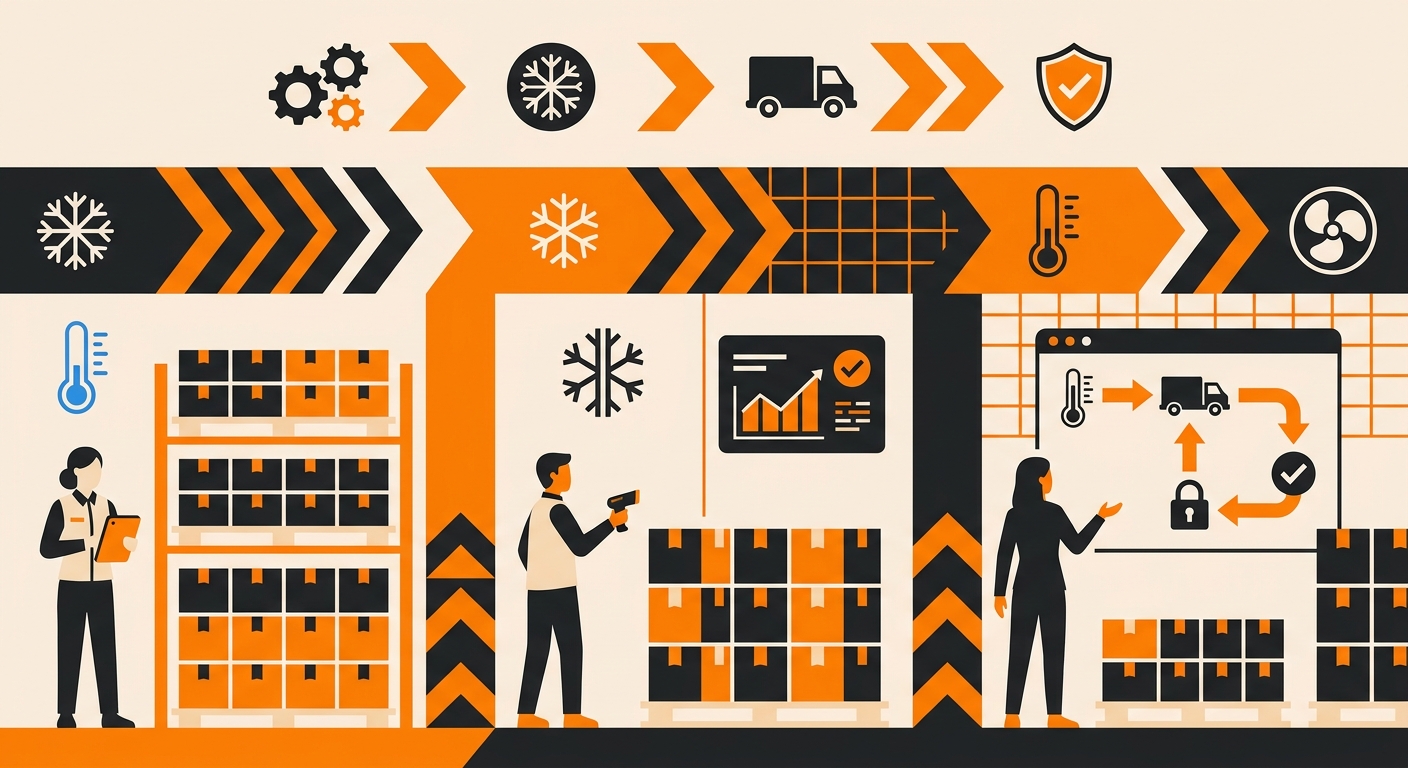
The WMS assigns each SKU to a temperature zone, typically frozen (below 0°F), refrigerated (34–40°F), or controlled ambient (55–70°F). Products are slotted by velocity so high-turn SKUs sit closest to pick aisles, cutting exposure time during retrieval.
Pick-and-pack under temperature control
Pickers work in climate-controlled zones with time-limited pick windows. Orders move directly into pre-chilled packaging with gel packs or dry ice calculated by the OMS based on transit time and destination climate.
Carrier handoff with cold-chain documentation
The 3PL generates a temperature-validated bill of lading and hands orders to carriers certified for cold-chain freight. Sensor data logs accompany each shipment for compliance purposes.
Key Components of a Cold Chain 3PL
The key components of a cold chain 3PL include:
Temperature-Controlled Storage

This is the non-negotiable foundation. Without dedicated refrigerated or frozen zones, a provider isn’t operating a true cold chain; it’s just a cold storage warehouse with a cooler.
Continuous Temperature Monitoring
Sensors log conditions at set intervals (often every 15-30 minutes) throughout storage and transit. Any deviation triggers an alert before product integrity is compromised, not after a shipment arrives rejected at the dock.
Cold-Compliant Packaging and Handling
Insulated shippers, gel packs, dry ice, and validated packing protocols keep products within spec during the pick-pack-ship window. This step fails more often than storage does; a product can leave a perfect 4°C chamber and spoil in a 90-second staging delay.
Carrier Network With Refrigerated Last-mile Options
The 3PL must have pre-vetted relationships with carriers that offer temperature-controlled ground and expedited lanes. A strong ambient carrier network doesn’t automatically extend to cold-capable shipping.
Best Practices for Cold Chain Fulfillment
-
Require your 3PL to log temperature readings at every handoff point, including receiving, storage, and outbound staging.
-
Set a maximum excursion window of no more than 30 minutes for any product moving between controlled zones.
-
Audit carrier compliance quarterly; verify that refrigerated last-mile partners maintain documented cold chain records, not just verbal assurances.
-
Avoid storing products with different temperature requirements in the same zone, even briefly during pick-and-pack.
-
Confirm your 3PL’s backup power protocol covers at least 72 hours of uninterrupted refrigeration in the event of a facility outage.
-
Review SKU-level spoilage rates monthly and flag any product with losses exceeding 2% of units shipped as a process failure, not a cost of doing business.
Ready to Work With a Cold Chain 3PL Partner?
If your products require temperature control between the warehouse dock and your customer’s door, choosing the right temperature-controlled fulfillment partner is critical.
A cold chain 3PL that misses a single temperature excursion will cost you an entire shipment, a regulatory violation, and a customer relationship built over years.
Fulfyld works with eCommerce brands and DTC operators who need more than a warehouse with a refrigerator.
Talk to a Fulfyld Specialist and get a fulfillment plan built around your temperature, volume, and shipping requirements.