

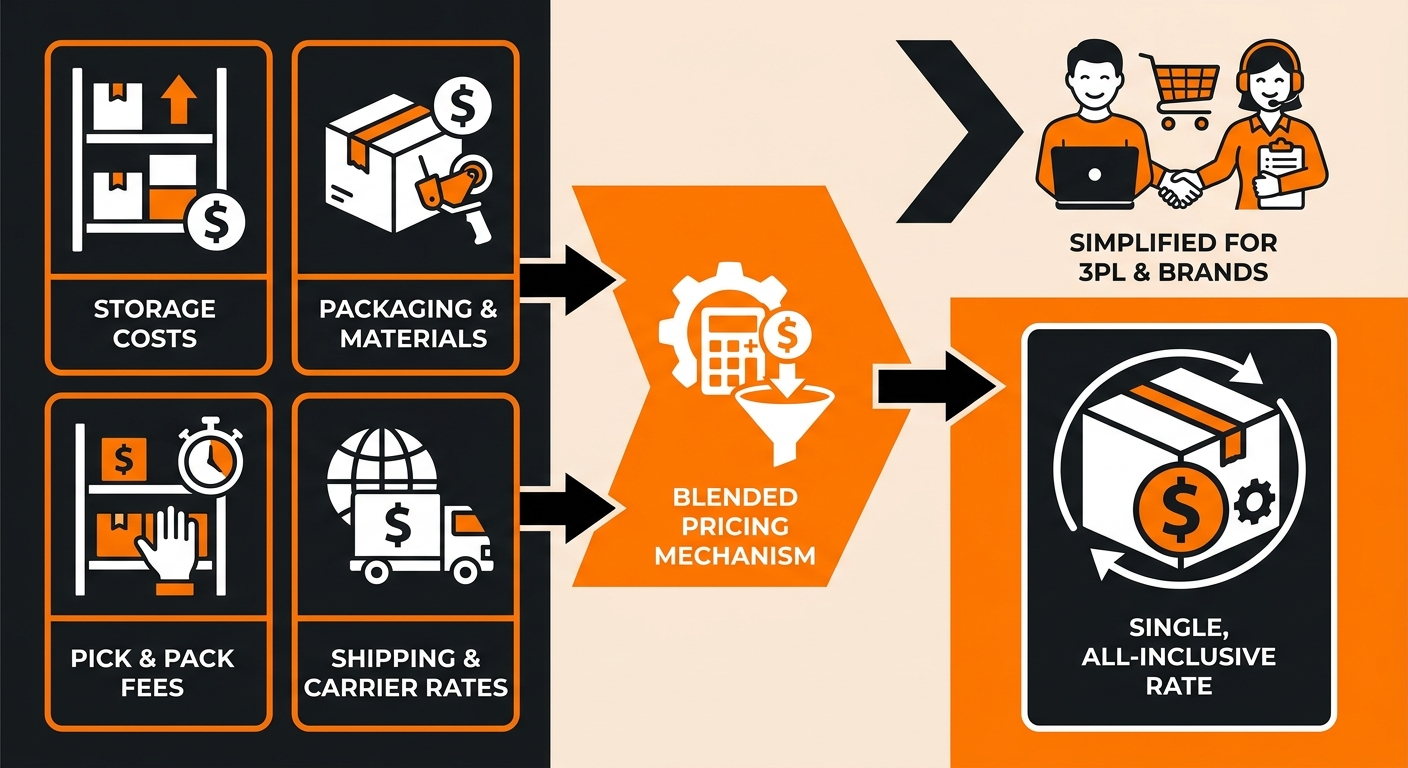
Quick answer: Blended pricing in a 3PL is a billing model where multiple fulfillment charges, such as pick fees, pack fees, and standard shipping handling, are combined into a single flat rate per order, rather than billed as separate line items.
How Blended Pricing Works
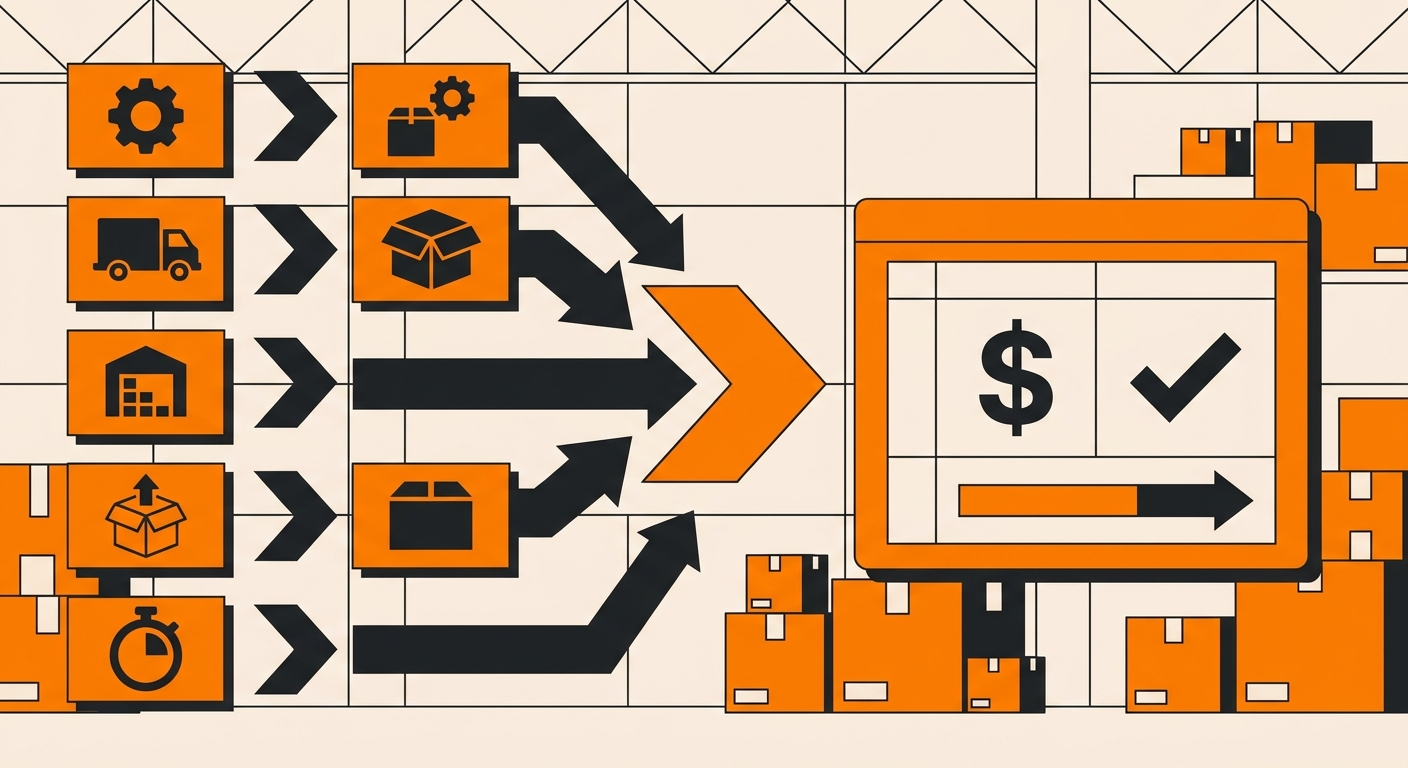
In a standard 3PL pricing model, each fulfillment activity is charged individually. A single order might generate separate fees for receiving, storage, picking each unit, packing materials, and carrier handling. Blended pricing collapses most or all of those into one predictable per-order cost.
The bundled rate is typically calculated based on a client’s historical order profile: average order size, SKU count, weight range, and packaging requirements. The 3PL uses that data to set a rate that covers expected costs across the majority of orders.
What’s included in the blend varies by provider. Some 3PLs bundle pick-and-pack only. Others fold in materials, dunnage, and base carrier surcharges. It’s worth getting a clear breakdown of what’s inside the rate before signing a contract.
Key Benefits of Blended Pricing
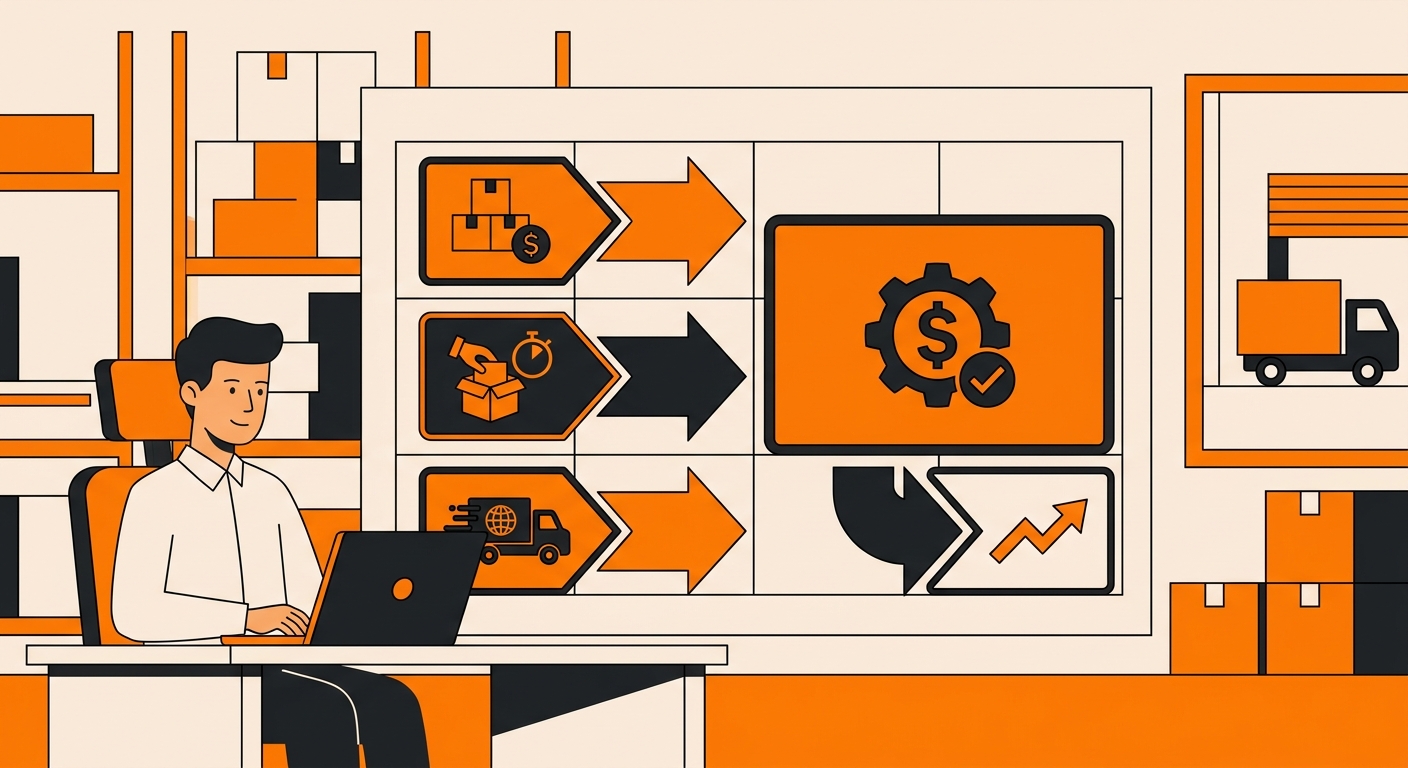
The main advantage is predictability. Brands know their fulfillment cost per order before the month closes, which makes cost per order calculations and margin planning significantly easier.
It also reduces invoice complexity,. Instead of reconciling 8–12 line items per order, finance teams work with a single number. For high-volume operations, that’s a meaningful operational simplification.
For the 3PL, blended pricing reduces back-and-forth on billing disputes and incentivizes efficiency. If they can fulfill orders faster or cheaper than the blended rate assumes, the margin stays with them.
How Blended Pricing Differs from Itemized Pricing
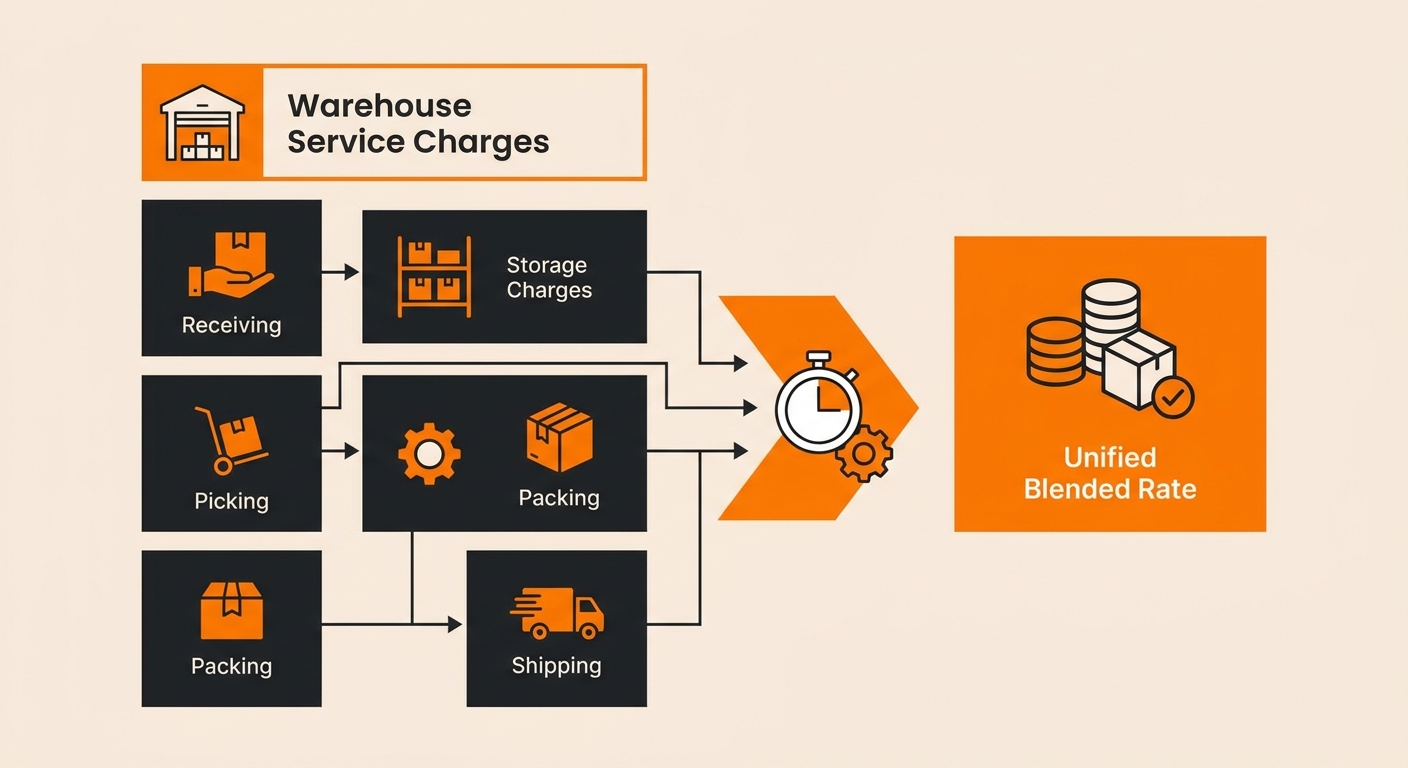
With itemized pricing, every action in the fulfillment process is billed at its actual cost. This model is more transparent and can work in a brand’s favor when orders are simple:: low SKU count, lightweight packages, minimal handling.
Blended pricing tends to favor brands with consistent, predictable order profiles. If your orders vary significantly in complexity, some with two items, some with ten, a flat blended rate may either overcharge simple orders or undercharge complex ones. In those cases, itemized or custom fulfillment pricing may be a better fit.
When Do 3PLs Use Blended Pricing?
Blended pricing is most common in two situations:
-
High-volume accounts where the 3PL has enough data to model a reliable average and the client’s order profile is stable enough to make flat-rate pricing viable.
-
Brands with standardized SKUs and packaging where fulfillment complexity doesn’t vary much order to order.
It’s less common for brands with wide product variety, irregular order volumes, or frequent kitting requirements, situations where pick and pack fulfillment costs can swing significantly between orders.
Some 3PLs also use blended pricing as a simplified onboarding model, with the understanding that the rate is revisited once actual order data comes in.
Blended Pricing and Fulfillment Cost Visibility
One trade-off worth understanding: blended pricing can obscure where costs actually sit. If your order profile shifts, say, you add heavier products or start shipping more multi-unit orders, a fixed blended rate may no longer reflect reality, and renegotiation becomes necessary.
Brands that prioritize cost visibility often prefer itemized pricing, or ask their 3PL partner for a blended rate with a clear breakdown of what’s bundled in. That way, you get the simplicity of a flat rate without losing sight of the underlying 3PL rate card mechanics.