

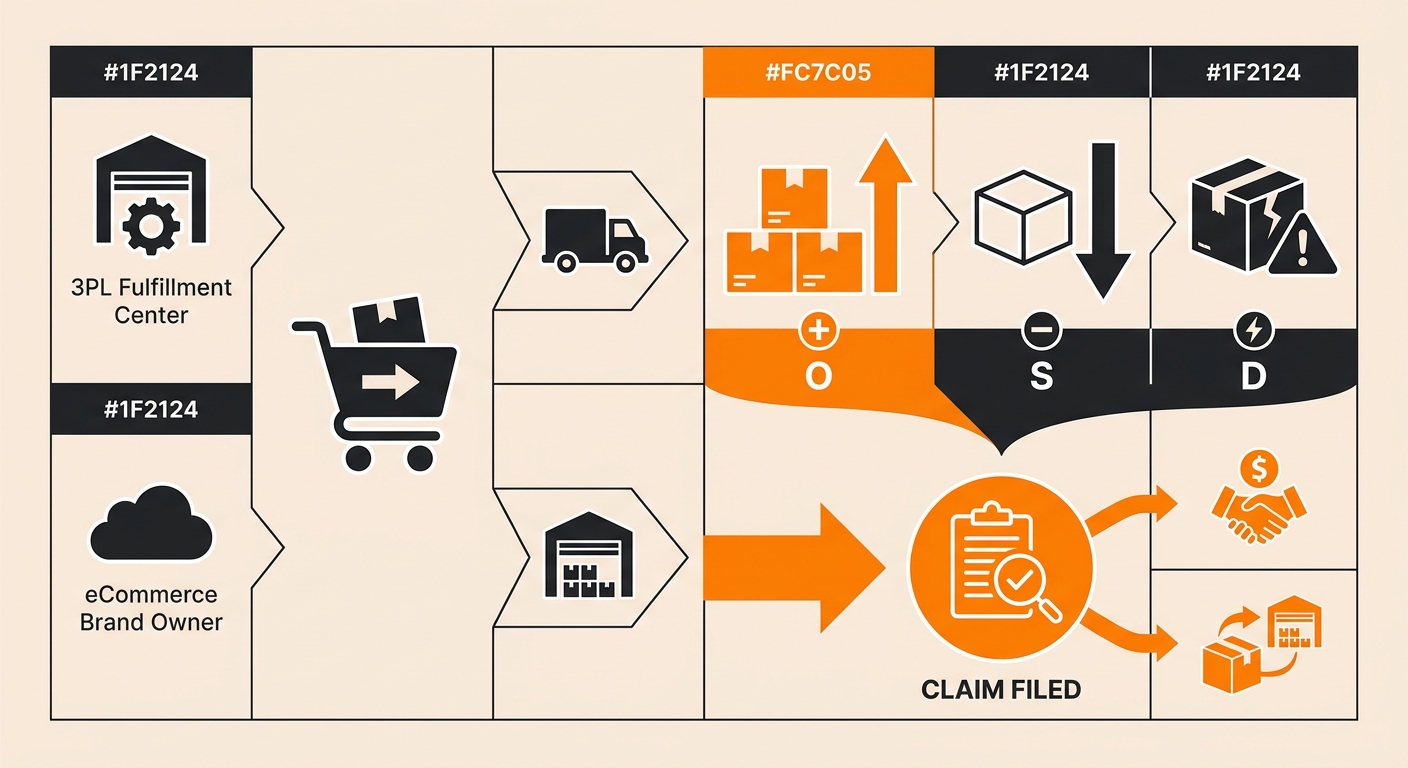
Quick answer: An OS&D claim (Over, Short & Damaged claim) is a formal dispute filed when a freight shipment arrives with discrepancies. Meaning goods were received in excess of what was ordered, fewer units arrived than expected, or items sustained physical damage during transit.

What Each Category Actually Means
The three components of an OS&D claim cover distinct types of shipment exceptions:
-
Over refers to receiving more units than what was listed on the bill of lading or purchase order. This sounds like a win, but it still requires documentation. Accepting unaccounted inventory without reporting it can create compliance and billing issues down the line.
-
Short means fewer units arrived than what was shipped. This is the most common OS&D scenario and typically triggers a carrier investigation or a claim for the missing goods’ value.
-
Damaged applies when goods arrive with physical harm, broken packaging, crushed cartons, moisture damage, or product that’s no longer sellable. The damage must be documented at the point of delivery to be claimable.
Each category is handled similarly from a process standpoint, but the resolution and liability outcome can differ depending on the carrier agreement and the nature of the discrepancy.
How to File an OS&D Claim
Timing and documentation are everything. A poorly documented or late-filed claim is often denied outright.
Step 1: Inspect at delivery
Before signing the proof of delivery (POD), inspect the shipment carefully. If you notice any discrepancy or damage, note it directly on the delivery receipt before the driver leaves. A clean signature with no exceptions noted significantly weakens your claim.
Step 2: Document everything immediately

Take photos of the damaged or missing goods, the packaging, pallet condition, and any visible carrier seals. Document unit counts against the bill of lading.
Step 3: Notify the carrier promptly.
Most carriers require OS&D claims to be filed within a specific window, often 9 months for loss or shortage, and as little as 5–15 days for visible damage, depending on the carrier and shipment type. Missing this window typically voids your right to recover.
Step 4: Submit the formal claim
File with the carrier in writing, including the original bill of lading, commercial invoice, proof of delivery with noted exceptions, photos, and a clear statement of the claimed amount.
Step 5: Follow up
Carriers are required to acknowledge claims within 30 days and resolve them within 120 days under standard freight regulations. Keep records of all correspondence.
Who Bears Responsibility for OS&D Discrepancies
Liability depends on where the discrepancy originated. If damage or shortage occurred while goods were in the carrier”s custody, the carrier is typically responsible. If the issue stems from improper packaging, incorrect pick quantities, or warehouse error before handoff, liability shifts to the shipper or the 3PL handling fulfillment.
This is why thorough receiving procedures and accurate inventory management matter. They make it far easier to establish exactly when and where a discrepancy occurred.
For businesses using a third-party logistics provider, understanding how your 3PL handles inbound receiving and reverse logistics documentation is critical. A reliable fulfillment partner will flag OS&D discrepancies at receiving, document them properly, and support the claims process on your behalf.
How OS&D Claims Affect Your Supply Chain
Unresolved OS&D discrepancies do more than cost money in the short term. Recurring shorts or damage patterns with a specific carrier or supplier are a signal worth investigating.. They can point to systemic packaging failures, carrier handling issues, or inaccurate pick processes upstream.
Tracking OS&D incidents over time gives you the data to negotiate better carrier terms, adjust packaging standards, or make informed decisions about which fulfillment partners you work with. A well-run supply chain treats every OS&D claim as both a recovery mechanism and a diagnostic tool.