

A Proposition 65 warning is a legally required notice that a product contains one or more chemicals the state of California has listed as known to cause cancer, birth defects, or other reproductive harm.
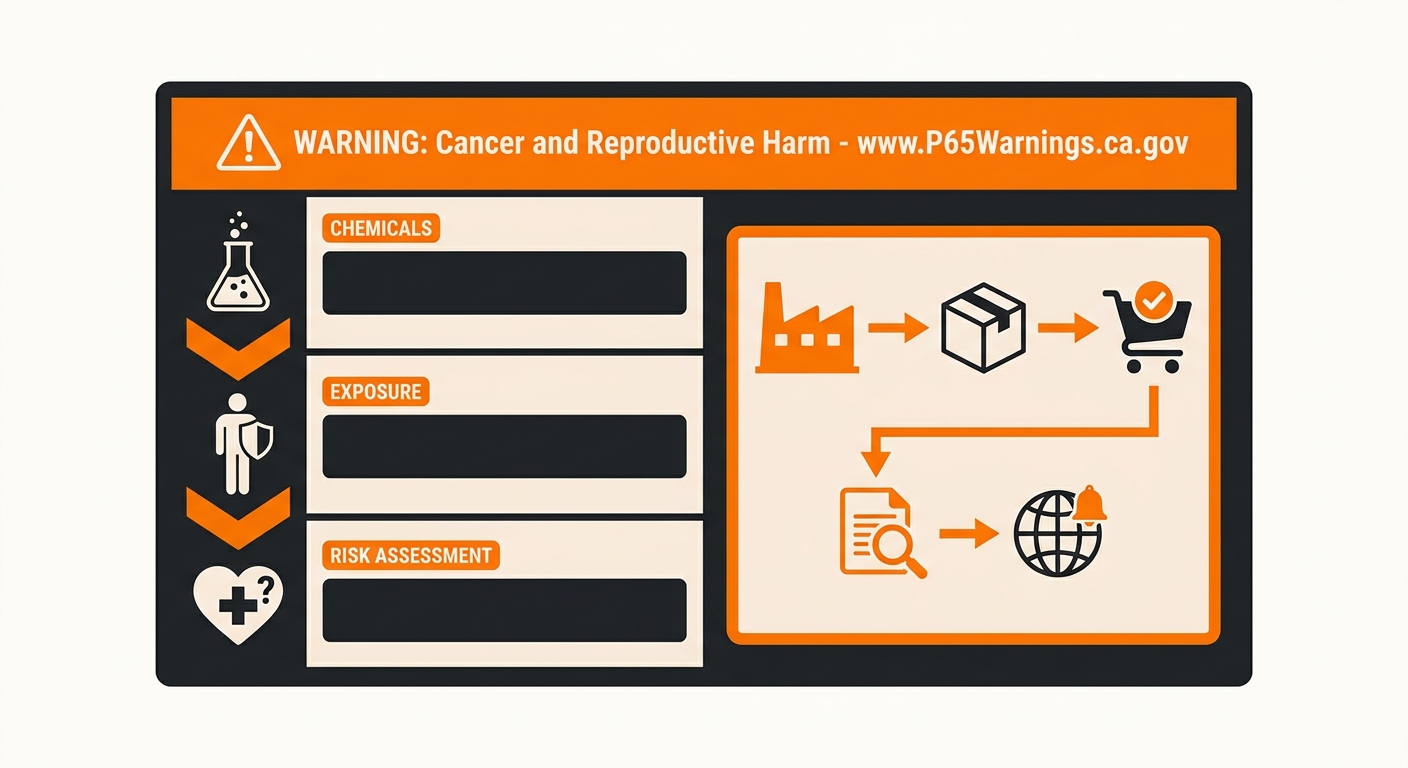
The Prop 65 Warning, Explained
Proposition 65, formally the Safe Drinking Water and Toxic Enforcement Act of 1986, requires California businesses to warn consumers before knowingly exposing them to chemicals listed by the state as causing cancer, birth defects, or other reproductive harm. The list includes over 900 chemicals.
When you see a label that reads “WARNING: This product can expose you to chemicals including [X], which is known to the State of California to cause cancer,” that’s a Prop 65 warning.
Who the Law Actually Covers
The law applies to any business with 10 or more employees that sells products in California, regardless of where the business is headquartered. A brand based in New York shipping to a California customer faces the same requirements as a manufacturer in Los Angeles.
The warning threshold isn’t zero exposure; it’s a specific daily exposure level set per chemical, which is why so many products carry the label.
How Prop 65 Warning Requirements Actually Work
The compliance process is a chain of decisions that starts before your product ships and follows it all the way to the customer. Here’s how it moves in practice.
Chemical Screening Against the Prop 65 List
Your product’s materials are tested or documented against California’s published list of over 900 chemicals. Manufacturers typically provide a Safety Data Sheet (SDS) or third-party lab report confirming which listed substances are present and at what concentration.
Exposure Threshold Comparison
Each detected chemical is measured against OEHHA’s “safe harbor” No Significant Risk Level (NSRL) for carcinogens or Maximum Allowable Dose Level (MADL) for reproductive toxins. If your product’s exposure exceeds those thresholds, a warning is legally required.
Warning Label Assignment Before Fulfillment
The warning must appear on the product label, inner packaging, or point-of-sale display before the unit ships into California. For eCommerce brands, this is the stage where a 3PL’s kitting and labeling capabilities matter most. Labels applied post-pick, but pre-ship, can create compliance gaps if the process isn’t defined precisely.
Ongoing Reformulation Monitoring
OEHHA updates the chemical list regularly. A product compliant today may require a new warning after a list update, which means screening can’t be a one-time event.
Key Components of a Prop 65 Warning
Listed Chemical
Every warning traces back to a specific listed chemical on California’s Prop 65 registry, which currently includes over 900 substances. Without identifying that chemical, the warning has no legal standing.
Exposure Route
The warning must reflect how exposure occurs: ingestion, inhalation, or skin contact. A product that off-gasses a solvent carries a different warning than one where the chemical is present in a coating that contacts food.
Safe Harbor Threshold
Each listed chemical has a No Significant Risk Level (NSRL) or Maximum Allowable Dose Level (MADL) set by OEHHA. If your product’s exposure falls below that threshold, no warning is required at all.
Warning Language and Placement
California specifies exact warning text, including the yellow triangle symbol for products sold after August 2018. The warning must appear on the product label, packaging, or, for eCommerce orders, on a product display page before purchase is completed.
Best Practices for Prop 65 Compliance
-
Audit your entire product catalog against the current Prop 65 list every 90 days, since OEHHA adds chemicals multiple times per year.
-
Attach warning documentation to each SKU in your WMS so pick-and-pack teams can flag non-compliant units before they ship to California addresses.
-
Avoid printing generic “California residents” warnings on outer cartons alone; the warning must appear on or with the product itself, not just the shipping box.
-
Require chemical disclosure data from suppliers before onboarding any new SKU into your fulfillment workflow.
-
Set a 60-day review trigger any time a supplier reformulates a product, since reformulation can introduce newly listed substances.
-
Keep signed warning-language records for at least four years to support your defense if a 60-day notice arrives.
Ship Smarter With a 3PL That Knows the Details
A missing Prop 65 warning on products shipped into California triggers private enforcement lawsuits, with settlements averaging $83,000 under California’s private attorney general mechanism.
Fulfyld builds compliant labeling into your pick-and-pack workflow before orders leave the warehouse, reducing returns, compliance holds, and enforcement exposure.
Talk to a Fulfyld specialist about Prop 65 warning compliance and regulated product logistics.