

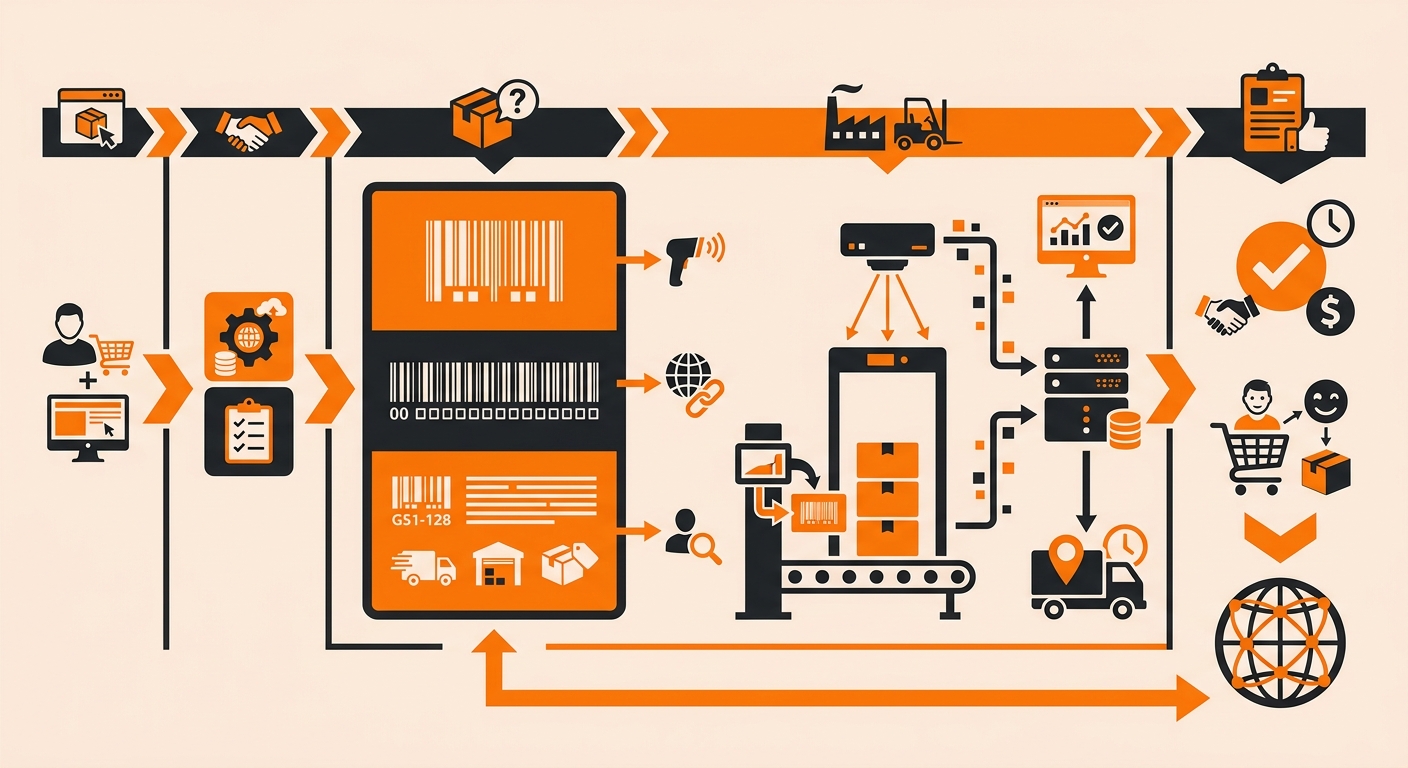
How UCC-128 and GS1-128 Relate to Each Other
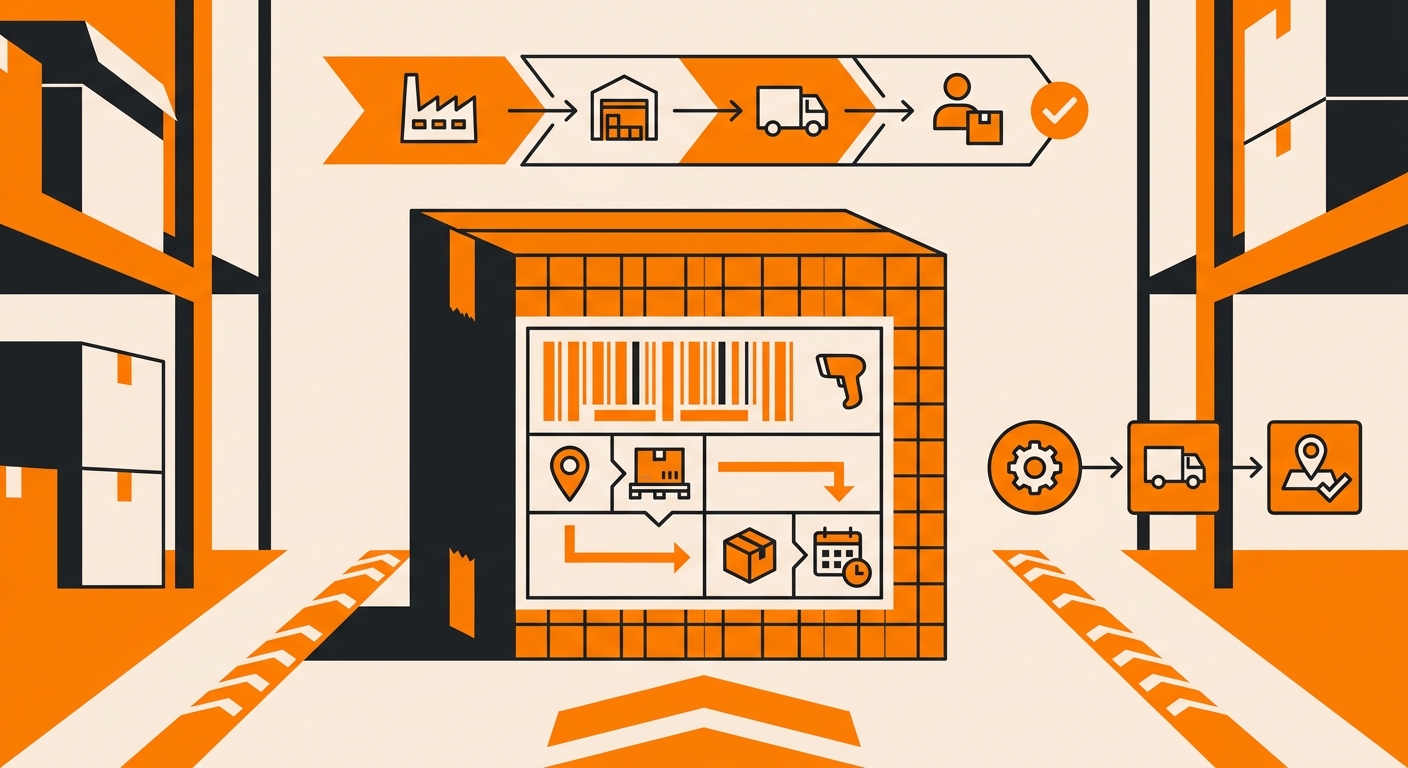
The terms are often used interchangeably, and for good reason, they refer to the same label standard. UCC-128 was the original name used in North America, developed by the Uniform Code Council. When the UCC merged with the international EAN organization to form GS1, the standard was rebranded as GS1-128.
Today, GS1-128 is the globally recognized name, but many retailers and 3PLs still use UCC-128 in their vendor compliance guides. If a buyer requires a “UCC-128 label,” they’re asking for the same thing as a GS1-128.
What a GS1-128 Label Contains
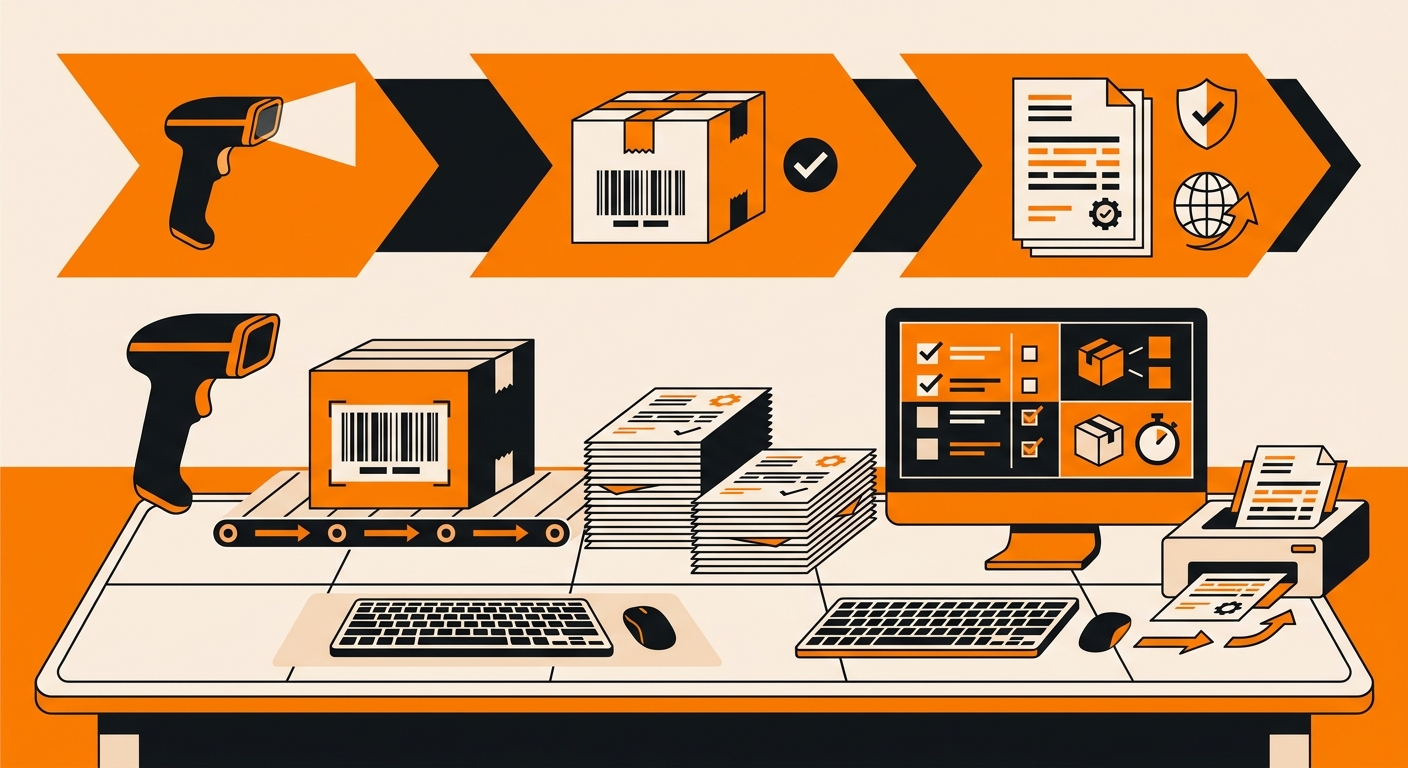
The label is structured around Application Identifiers (AIs), two-to-four digit codes that tell the scanner exactly what type of data follows. Common fields include:
-
SSCC (Serial Shipping Container Code): a unique 18-digit ID for the specific pallet or container;
-
GTIN: the product identifier for the items inside;
-
Quantity: the number of units or cases on the pallet;
-
Lot/batch number: critical for recalls and traceability;;
-
Expiration or production date: required for food, pharma, and regulated goods;
-
Ship-to and ship-from: destination and origin location data.
The human-readable text above each barcode mirrors the encoded data, which allows warehouse staff to verify shipments manually when needed.
When GS1-128 Labels Are Required
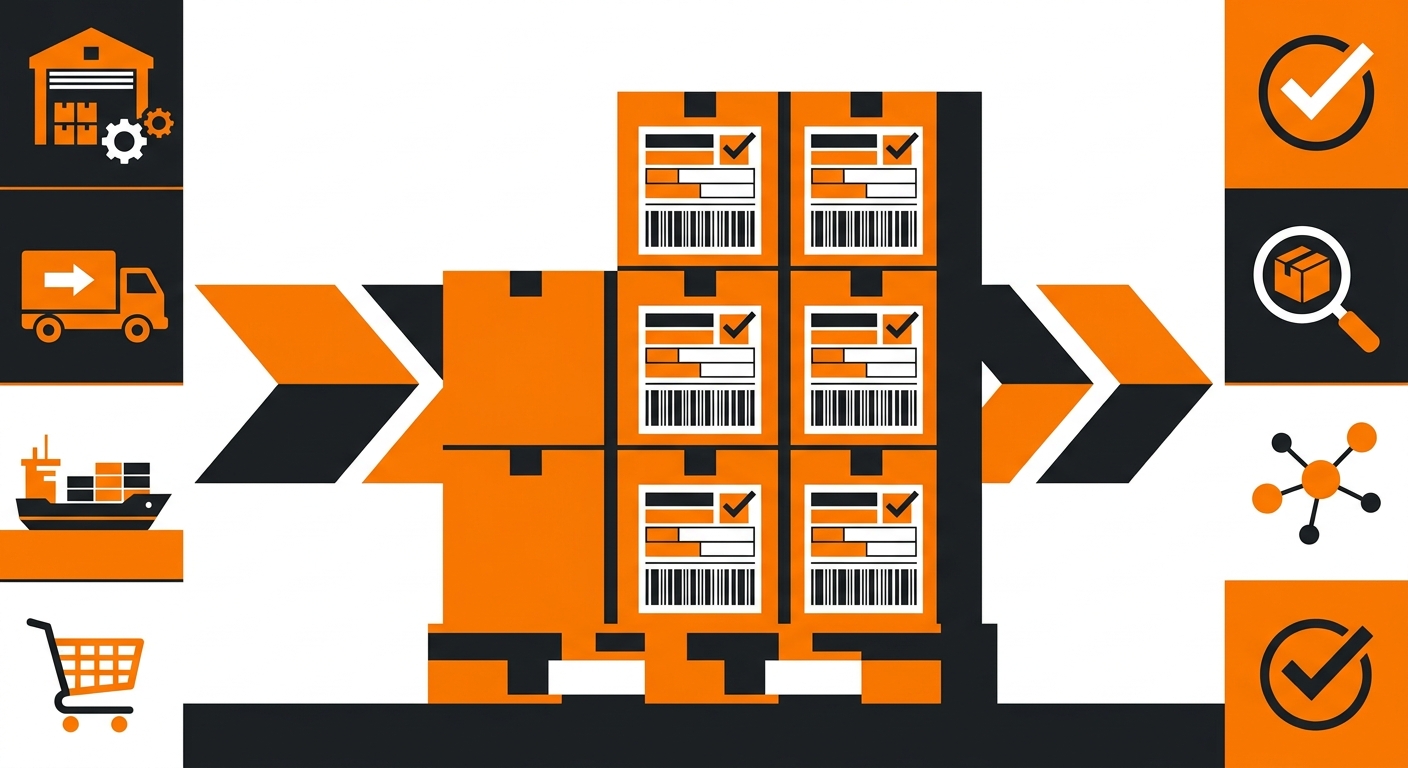
Retailers, distributors, and big-box buyers typically mandate GS1-128 labels as part of their vendor compliance programs. Walmart, Target, Amazon, and most major grocery chains have specific labeling requirements tied to their EDI processes, non-compliant shipments often result in chargebacks.
Beyond retail compliance, GS1-128 labels are standard practice in any B2B fulfillment operation that handles palletized goods. If you’re shipping LTL or full truckloads to a distribution center, expect this label to be required.
The label must appear on all four sides of the pallet, or at minimum on two adjacent sides, so it’s scannable regardless of how the pallet is positioned on a dock or in a rack.
How GS1-128 Labels Fit Into B2B Fulfillment
GS1-128 labels don’t exist in isolation. They’re typically generated as part of an EDI transaction, specifically the ASN (Advance Ship Notice / EDI 856), which is sent to the buyer before the shipment arrives. The SSCC on the label ties directly to the ASN data, allowing the receiver to match the physical pallet to the expected shipment, automatically.
This connection between label, ASN, and warehouse receiving system is what makes GS1-128 central to EDI compliance in retail. A missing or malformed label breaks that chain and typically triggers a chargeback.