

How Goods-to-Person Picking Works
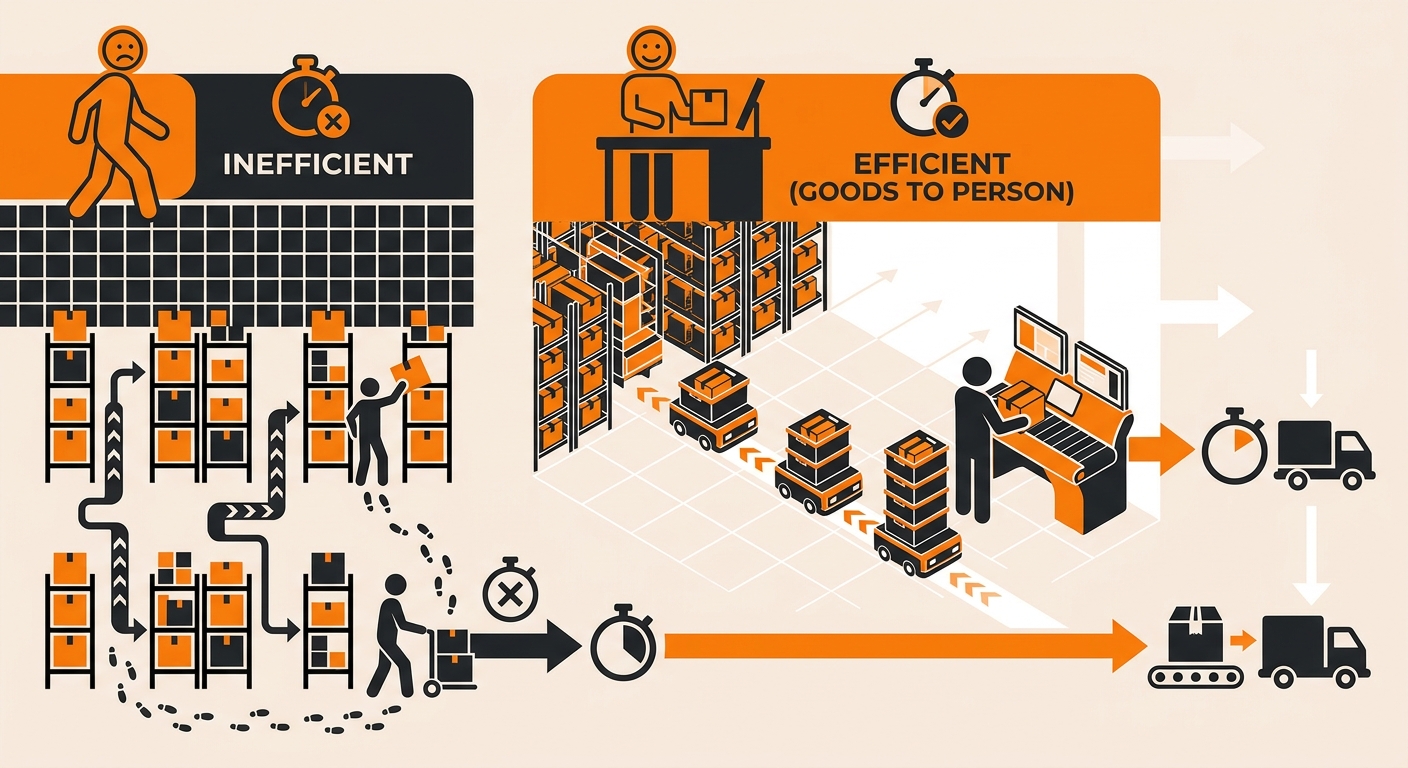
In a traditional warehouse setup, pickers spend the majority of their shift traveling between storage locations, a process that’s slow, labor-intensive, and prone to error. GTP flips that model entirely.
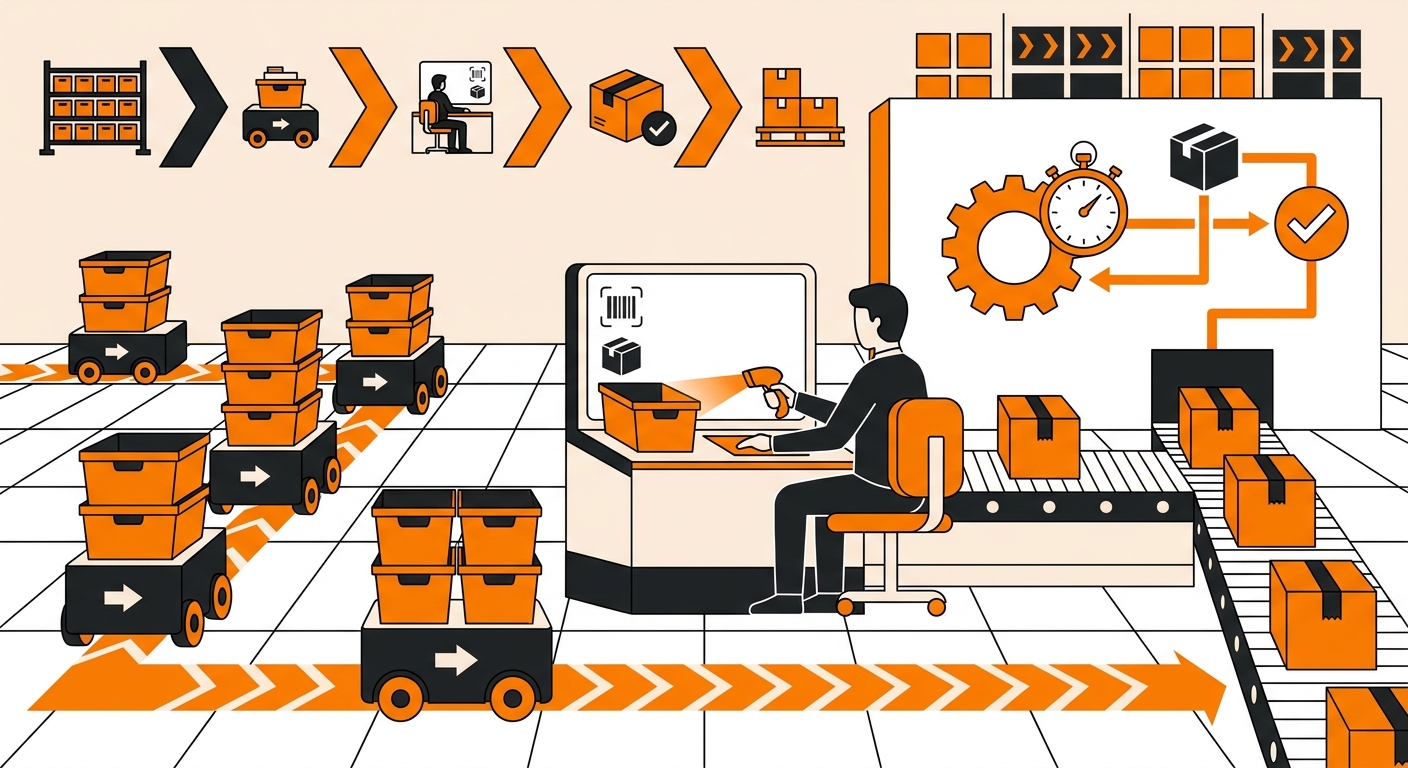
When an order is placed, the warehouse management system triggers an automated unit, a robot, shuttle, or storage carousel, to retrieve the relevant bin or tote and deliver it to a worker at a fixed workstation. The worker picks the required item, confirms it, and the container is returned to storage automatically.
The core components typically involved include:
-
AS/RS (Automated Storage and Retrieval Systems): racking systems with automated cranes or shuttles that store and retrieve inventory at high speed;
-
Mobile robots (AMRs/AGVs): autonomous robots that carry shelving units or totes directly to pick stations;
-
Vertical lift modules (VLMs) and carousels: space-efficient systems that rotate or elevate inventory to the operator”s level.
Key Benefits of Goods-to-Person Picking
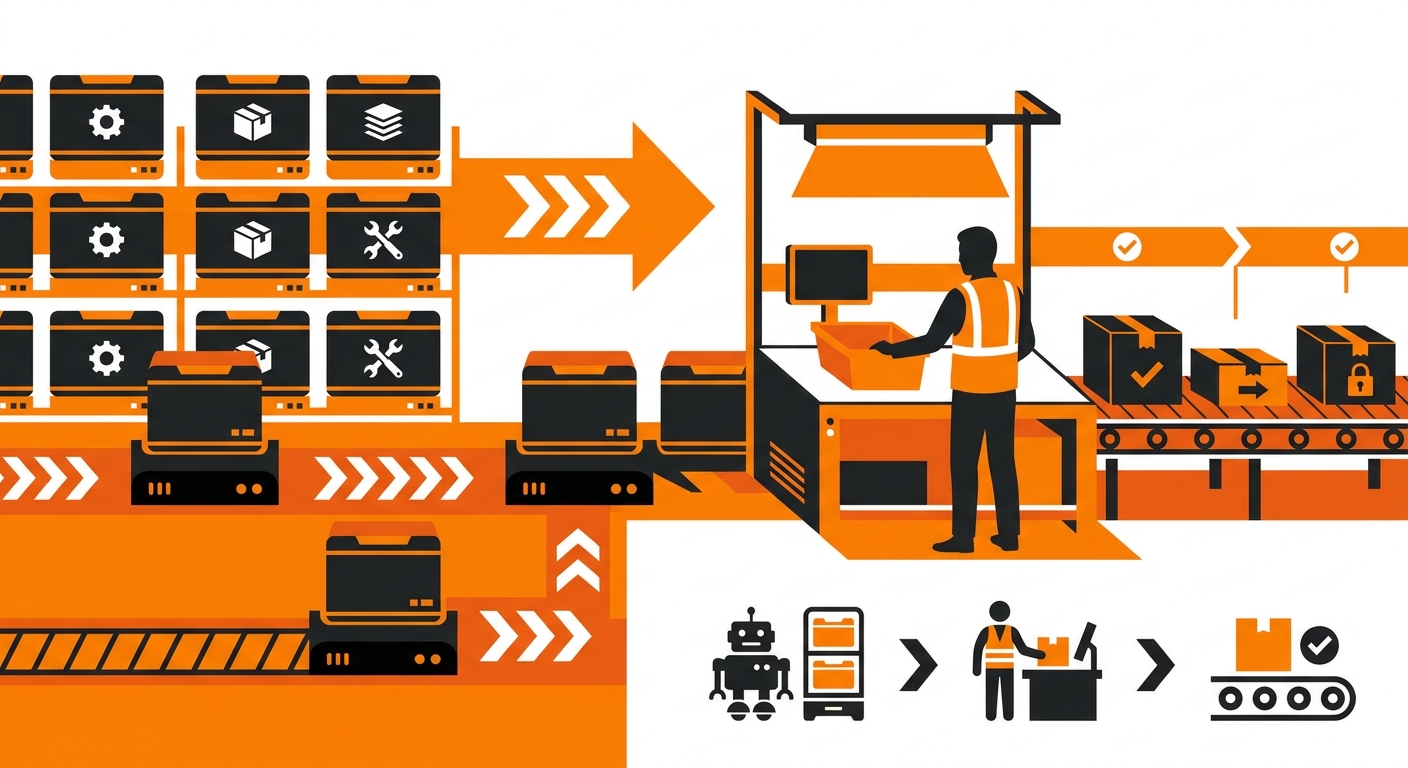
The most immediate gain is speed. Eliminating worker travel, which accounts for up to 60% of picking time in conventional warehouses, dramatically increases throughput per hour.
Accuracy improves as well. When a worker is focused at a single station with guided pick confirmation (via screen, barcode scan, or pick-to-light), error rates drop significantly compared to manual, floor-based picking.
Other advantages include:
-
Higher storage density: AS/RS systems stack inventory vertically, making better use of cubic warehouse space;
-
Reduced labor costs: fewer workers can handle higher order volumes;
-
Improved ergonomics: workers stay stationary and receive items at the right height, reducing physical strain.
How Goods-to-Person Differs from Person-to-Goods Picking
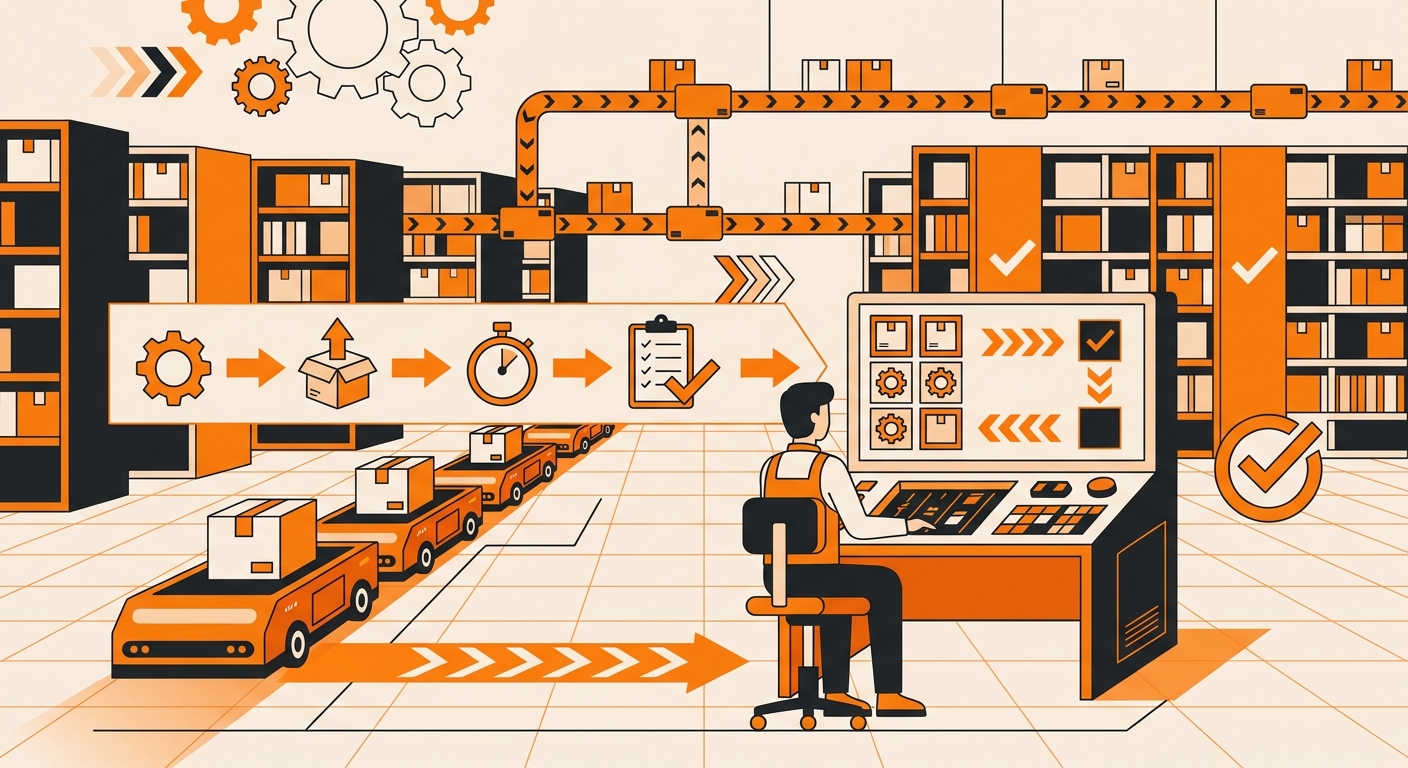
In standard person-to-goods (PTG) picking, workers navigate the warehouse using pick lists or handheld scanners to locate and retrieve items themselves. It requires minimal upfront technology but scales poorly as order volume grows.
GTP inverts this dynamic. The infrastructure does the traveling, while the human does the picking. This makes GTP well-suited for high-SKU, high-volume environments where PTG would require either a very large workforce or significant floor space.
The tradeoff is capital investment, GTP systems carry substantial upfront costs and require integration with a warehouse management system to function correctly.
When Should a Business Consider Goods-to-Person Picking?
GTP makes the most sense when a business is processing a high volume of small, multi-SKU orders, the kind of picking profile common in eCommerce and direct-to-consumer fulfillment. If your operation is consistently bottlenecked at the picking stage or if labor costs are consuming a disproportionate share of fulfillment expenses, GTP automation is worth serious evaluation.
It’s less practical for businesses with low order volume, a small SKU catalog or highly variable product dimensions that don’t fit well into standardized bins and totes.
Goods-to-Person Picking in Modern Fulfillment
As consumer expectations for fast delivery continue to tighten, GTP technology has moved from a competitive advantage to an operational baseline for large-scale fulfillment operations. Pairing GTP systems with a capable warehouse management system ensures inventory accuracy and real-time coordination between automated hardware and order flow.
For eCommerce brands scaling into higher order volumes, understanding whether your 3PL uses GTP infrastructure is a meaningful question. It directly affects how quickly and accurately your orders get out the door.