

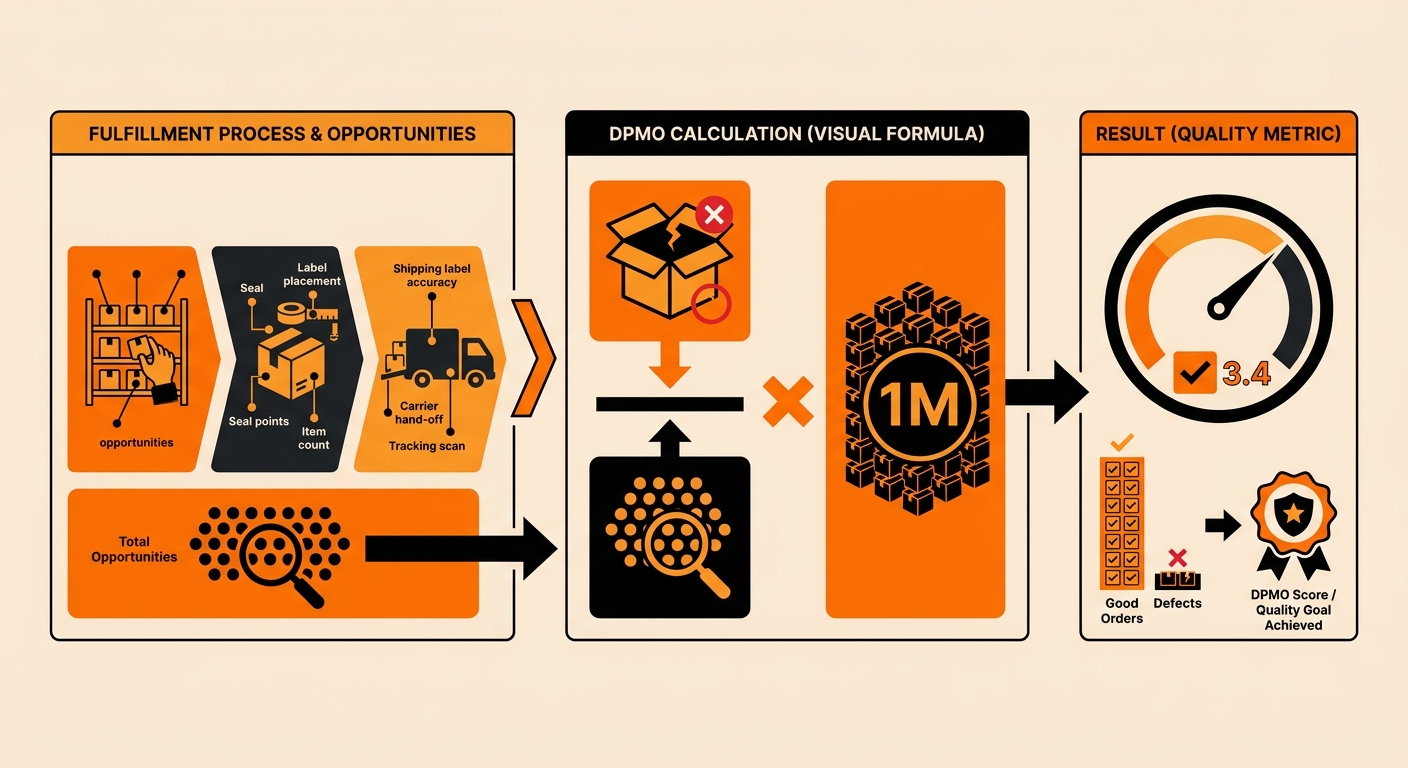
Quick answer: DPMO, or Defects Per Million Opportunities, is a quality metric that measures how many errors occur per one million chances for a defect to happen. In 3PL and eCommerce fulfillment, it quantifies how accurately and consistently orders are processed, packed, and shipped at scale.
What Does DPMO Stand For and How Is It Calculated
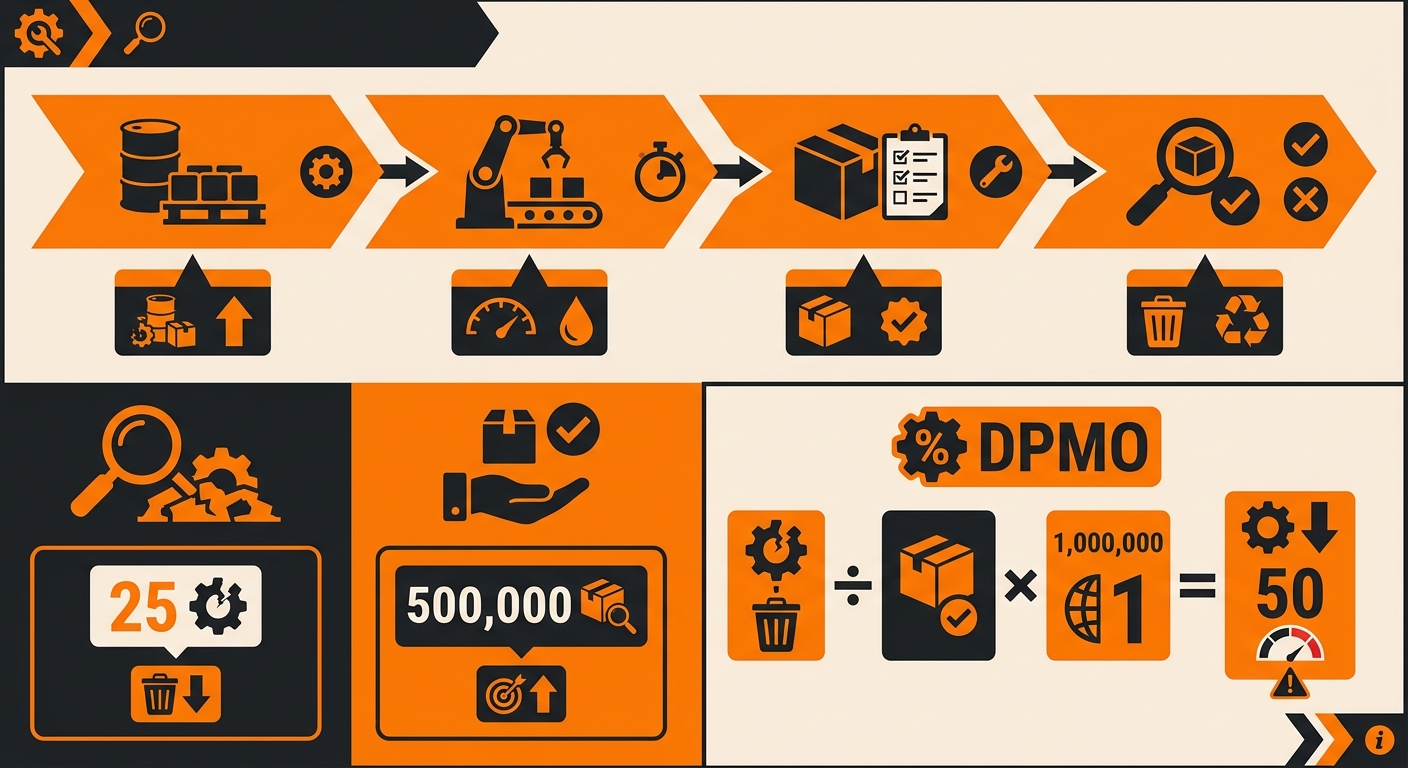
DPMO stands for Defects Per Million Opportunities. It originates from Six Sigma methodology, where it’s used to measure and benchmark operational quality across high-volume processes.
The formula is straightforward:
DPMO = (Number of Defects ÷ Number of Opportunities) × 1,000,000
In a fulfillment context, a “defect” is any deviation from a perfect order: a wrong item picked, a mislabeled package, a damaged shipment, or a missed delivery window. An “opportunity” is any single point in the process where that defect could occur.
For example, if a warehouse processes 50,000 orders and records 15 errors, the DPMO is 300, meaning 300 defects per million opportunities.
DPMO Meaning in Shipping and Fulfillment Operations

In shipping and 3PL operations, DPMO gives brands and logistics partners a standardized way to measure order accuracy and overall fulfillment quality. Rather than tracking raw error counts, DPMO normalizes performance across different order volumes, making it useful for comparing fulfillment providers, benchmarking against industry standards, or tracking improvement over time.
A world-class fulfillment operation typically targets a DPMO below 3,400, which corresponds to the Six Sigma standard of 99.99966% accuracy. Most high-performing 3PLs aim for DPMO figures in the low hundreds or lower.
Common defect types tracked in eCommerce fulfillment include:
-
Incorrect item picked or packed
-
Wrong quantity shipped
-
Damaged goods on arrival
-
Mislabeled or mis-addressed packages
-
Late shipments outside the promised window
How DPMO Differs from Order Accuracy Rate

Order accuracy rate and DPMO measure similar things but are not the same. Order accuracy rate tells you the percentage of orders fulfilled correctly.
DPMO goes further, it accounts for the number of individual opportunities for error within each order, not just whether the order as a whole passed or failed.
This distinction matters at scale. A brand shipping 10,000 orders monthly with a 99% accuracy rate still has 100 errors, and if each order has multiple defect opportunities, the underlying DPMO may reveal a more significant quality gap than the top-line percentage suggests.
DPMO and eCommerce Fulfillment Quality
For eCommerce brands evaluating or auditing a 3PL provider, DPMO is one of the more telling metrics to request. It surfaces the true error rate beneath summary-level statistics and helps distinguish between providers that genuinely operate at high accuracy versus those that look good on surface-level reporting.
Brands that monitor DPMO alongside other fulfillment KPIs, such as perfect order rate and cost per order,, are better positioned to catch quality issues early, hold their fulfillment partner accountable, and protect the customer experience before problems compound.