

How Automated Sortation Works
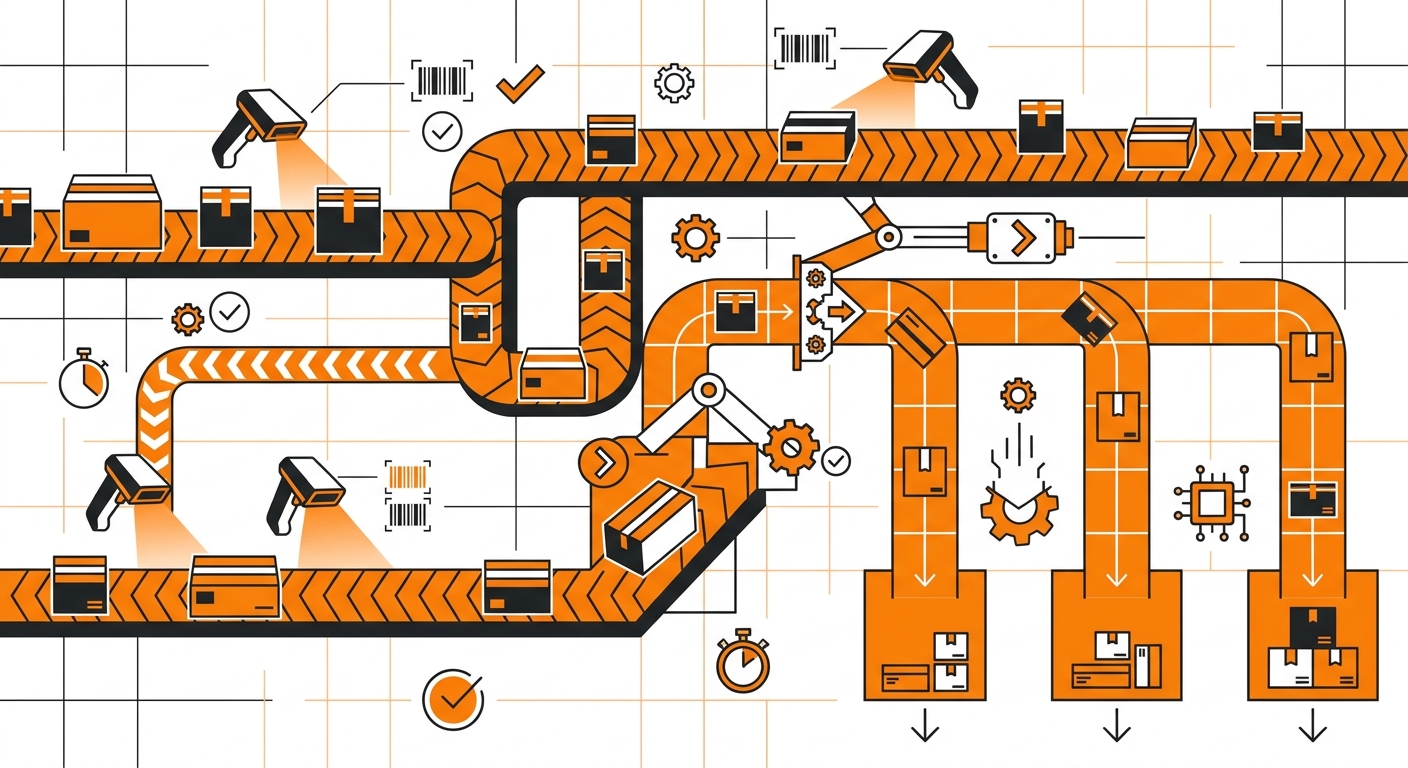
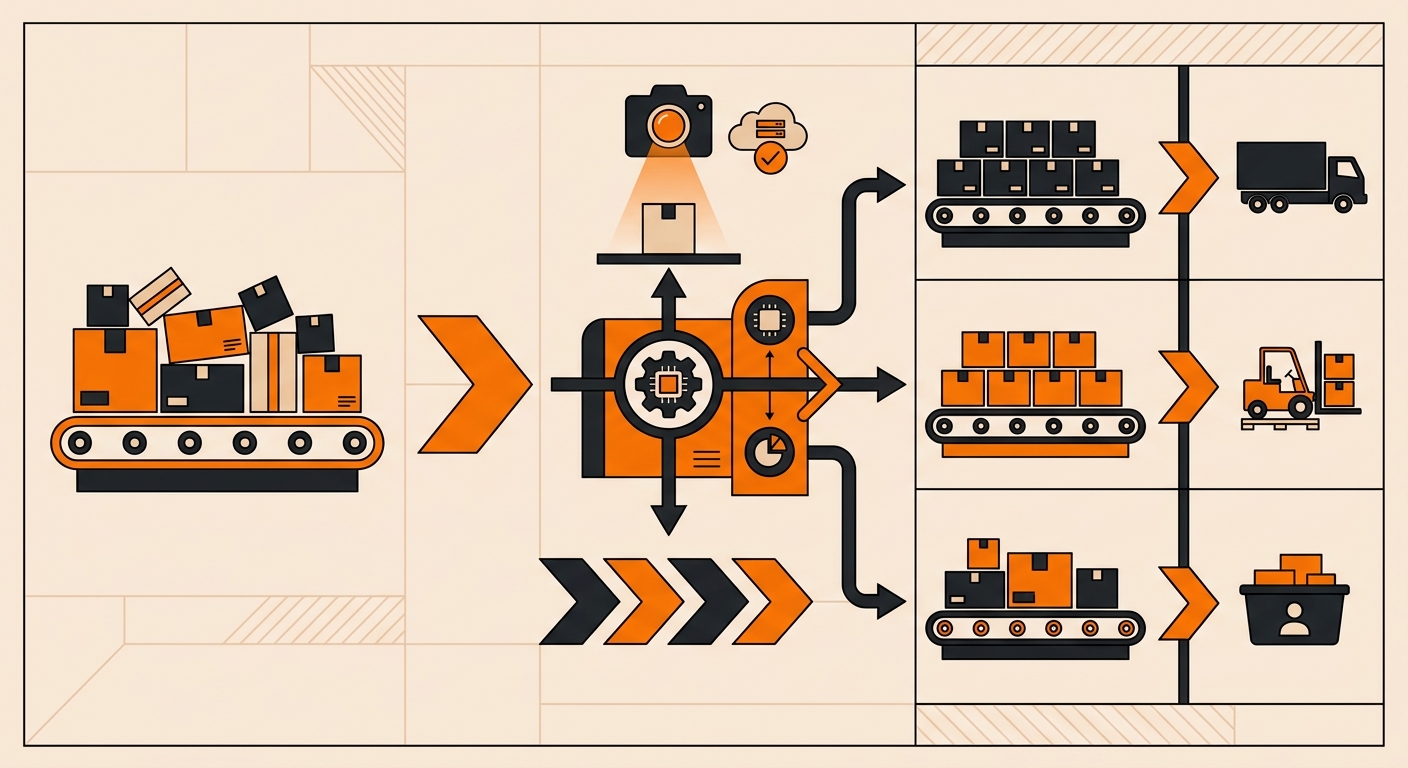
At its core, an automated sortation system reads identifying information on each item, typically via barcode scanning, RFID, or vision technology, and then physically directs that item along the correct path based on pre-set routing logic from a warehouse management system (WMS) or order management platform.
Items enter the sorter on an induction conveyor. Once scanned and identified, the system decides where each item needs to go and triggers the appropriate divert mechanism (a pusher, paddle, belt, or tilt tray) to redirect it.
The result is highspeed, high-accuracy sorting that would be physically impossible to replicate at scale with manual labor.
Common Types of Sorters
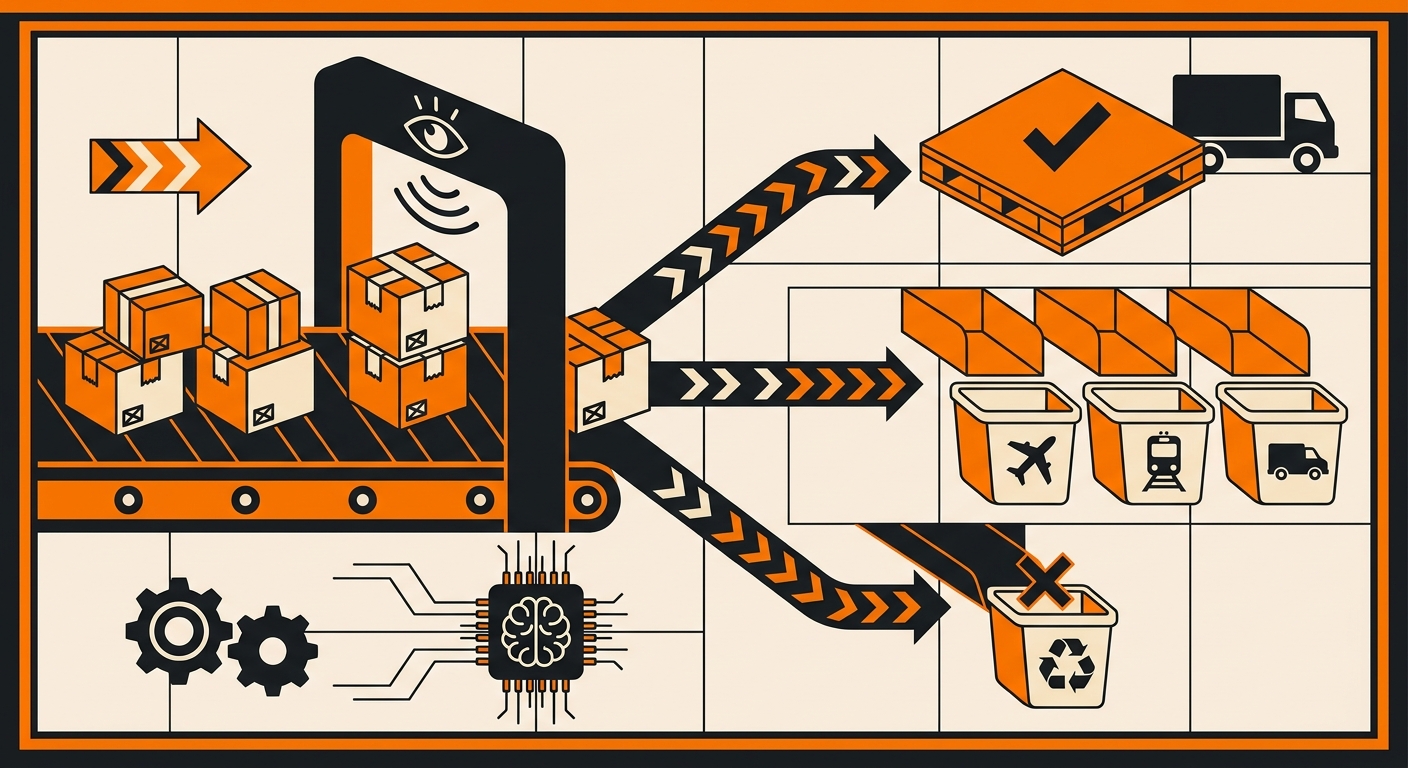
Different sorter types suit different product profiles and throughput requirements:
-
Crossbelt sorters: Each carrier has its own small conveyor belt that tilts to discharge items gently. Ideal for fragile or irregularly shaped goods.
-
Tilt tray sorters: Items sit on trays that tip at the correct divert point. Common in apparel and small parcel environments.
-
Sliding shoe sorters: Use embedded shoes that shift diagonally to guide items off the conveyor. Handle a wide range of sizes at high speeds.
-
Pop-up wheel sorters: Wheels rise through conveyor gaps to change item direction. Typically used for heavier cartons or cases.
-
Bomb bay sorters: The carrier opens beneath the item to drop it into a chute. Often used in postal and small-item sorting.
The right choice depends on product dimensions, fragility, throughput volume, and the number of sort destinations required.
Key Use Cases in eCommerce Fulfillment
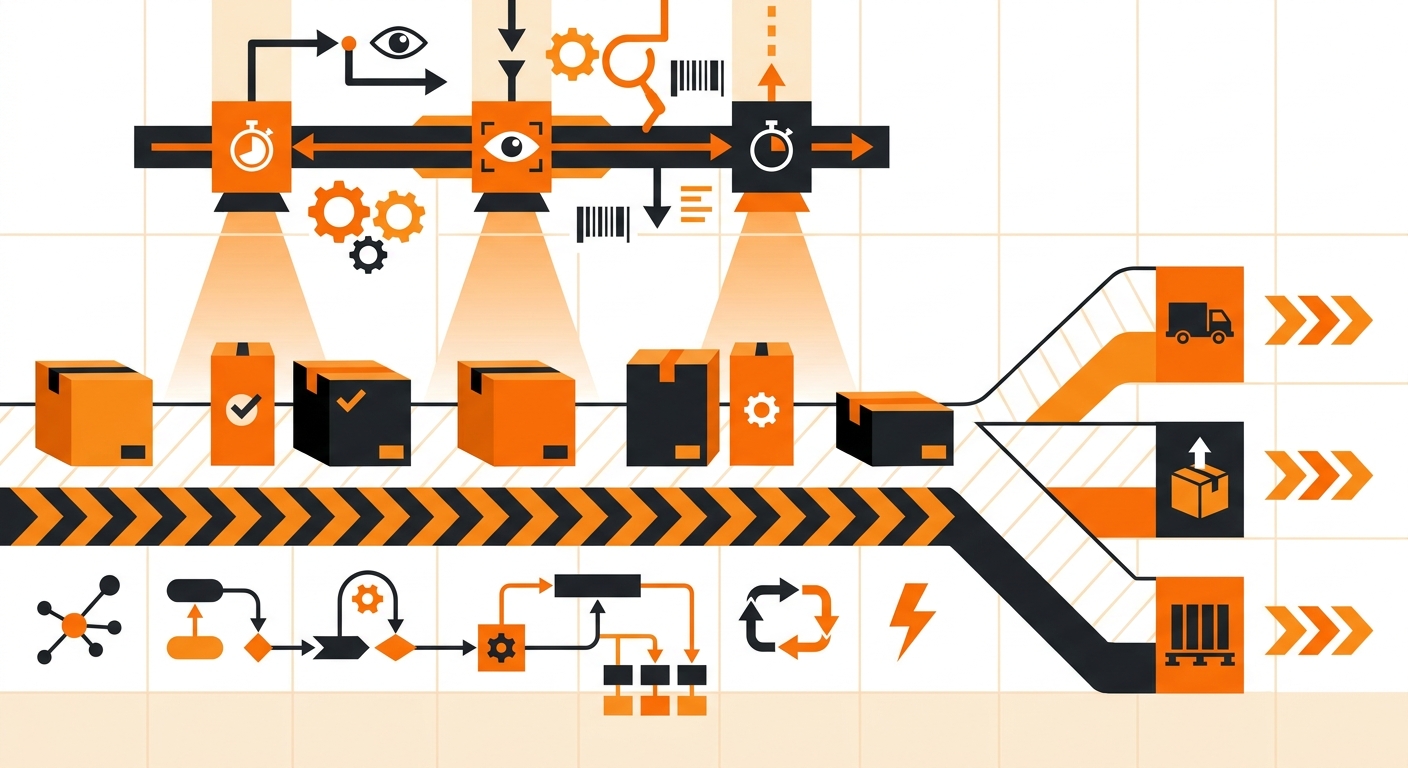
Automated sortation is most commonly deployed in three scenarios;
Order consolidation: After items are picked across multiple zones, a sorter brings them together into a single outbound order before packing.
Shipping lane assignment: Packed parcels are sorted by carrier, service level, or regional destination zone to streamline outbound loading.
Returns processing: Inbound returns are scanned and automatically routed to the correct disposition path (restocking, inspection, or removal from inventory) reducing manual handling time significantly.
In high-volume eCommerce fulfilment environments, sortation directly impacts how quickly orders move from picked to shipped, which has a measurable effect on delivery speed and cost per order.
When Does Automated Sortation Make Sense?
Sortation technology is not a one-size-fits-all investment. It typically makes operational sense when a facility is processing a high number of orders daily across multiple carriers or destinations, has a wide SKU mix that makes manual sorting error-prone, or is experiencing labor bottlenecks in the outbound area.
For growing eCommerce brands, the question is less about whether sortation helps and more about whether their 3PL partner has the infrastructure already in place. A fulfillment center equipped with modern sortation handles volume spikes, peak season, flash sales, subscription box launches, without adding proportional headcount.
Automated Sortation and Fulfillment Speed
Sortation is one of the less visible but most impactful layers of a well-designed fulfillment operation. It removes a major bottleneck between picking and shipping, reduces mislabeled or misrouted packages, and creates the throughput consistency that pick and pack fulfillment alone cannot guarantee at scale.
For brands shipping significant daily volume, the speed and accuracy of the sortation layer often determines whether a 2-day delivery promise is actually achievable or just a marketing claim.