

Quick answer: An EAN (European Article Number) is a standardized 13-digit barcode used to uniquely identify retail products across global supply chains. It is the international equivalent of the UPC (Universal Product Code) used in North America.
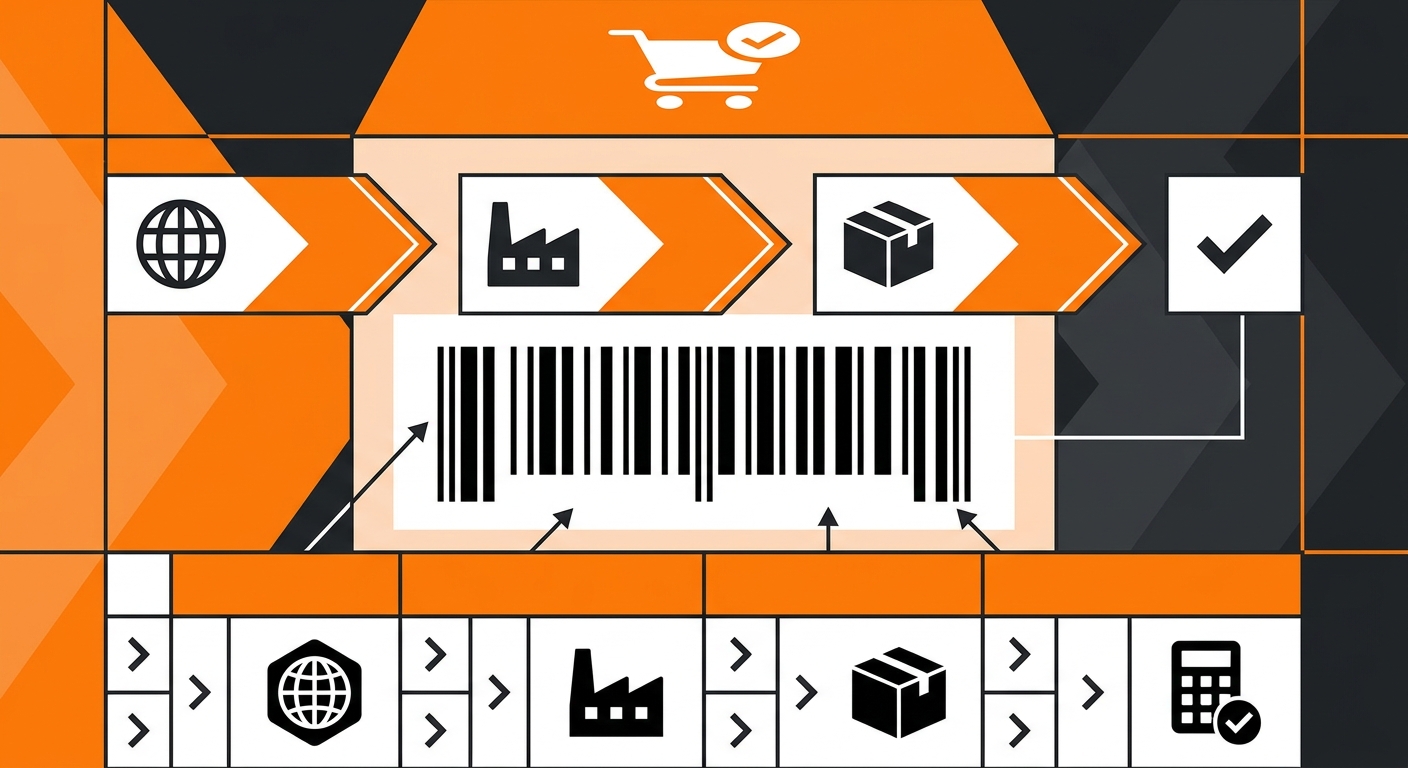
How an EAN Barcode Works
An EAN barcode encodes product information into a scannable format that can be read at any point in the supply chain: at receiving docks, warehouse shelves, and checkout counters alike.
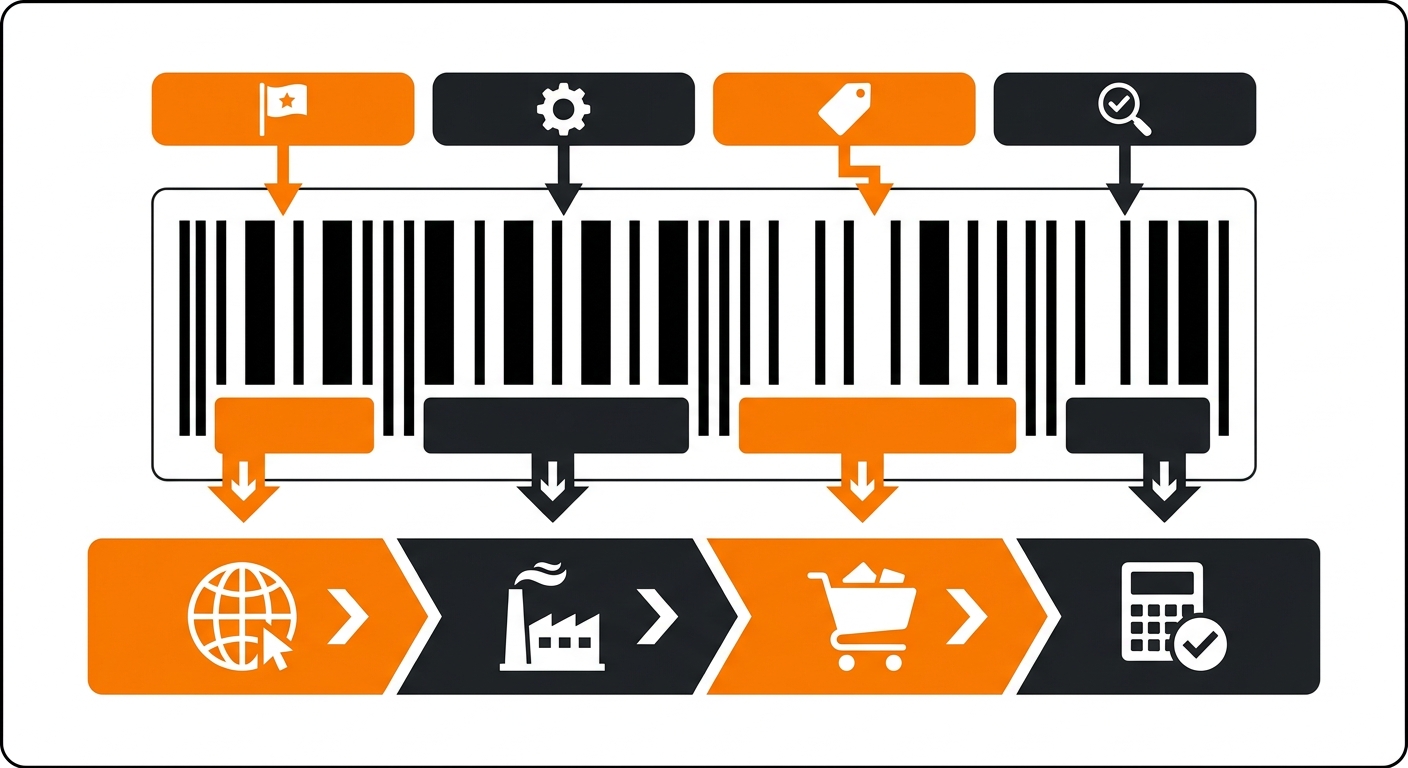
The standard EAN-13 format contains three pieces of information:
-
A country prefix (assigned by GS1, the global standards body)
-
A company code (assigned to the brand or manufacturer)
-
An item reference number (assigned by the company to a specific product)
The 13th digit is a check digit used to validate the barcode’s accuracy. There is also an EAN-8 variant for smaller packaging where space is limited.
What Does EAN Stand for in Shipping?
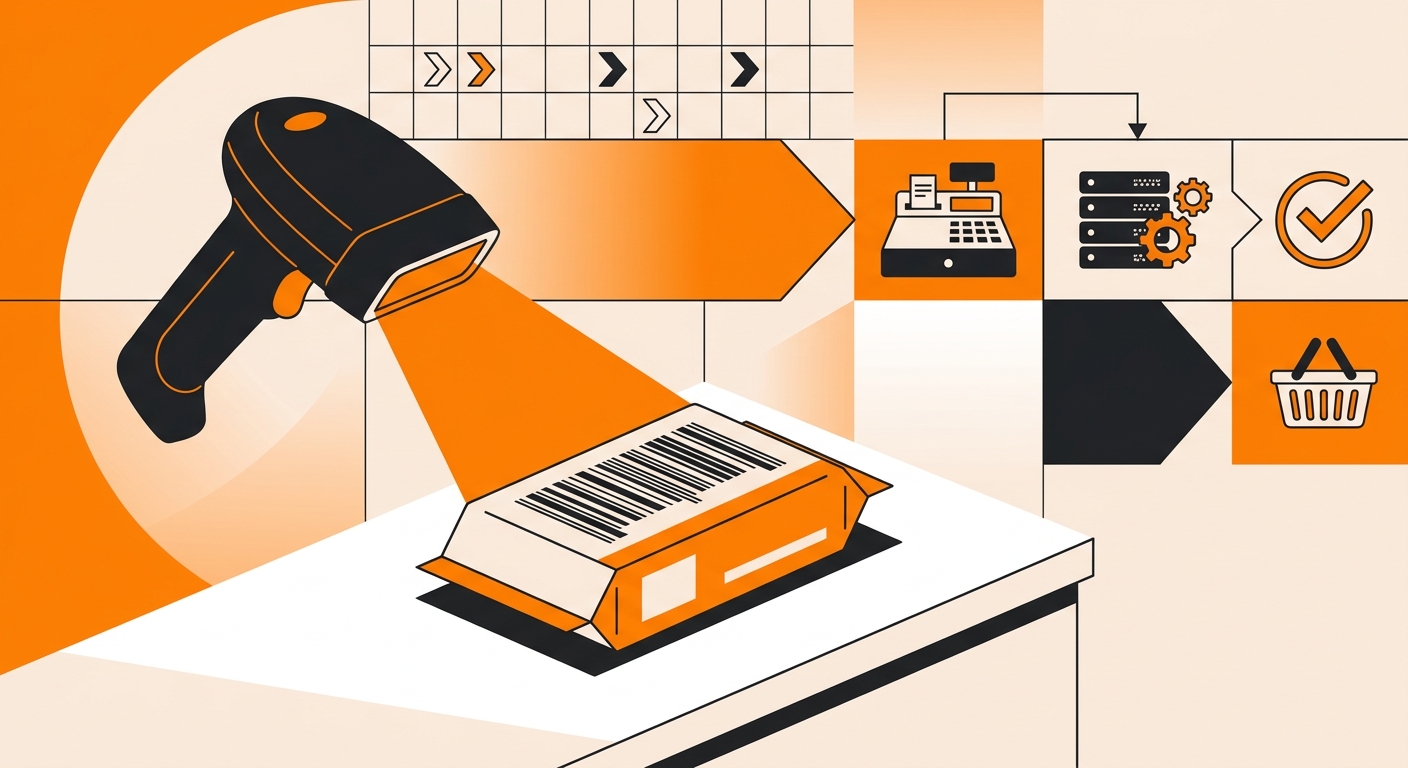
In a shipping and logistics context, EAN meaning in shipping refers to the role the barcode plays in tracking and moving goods accurately. When a 3PL warehouse receives inventory, EANs are scanned to confirm what arrived, in what quantity, and where it should be stored.
Every scan throughout the fulfillment process, inbound receiving, putaway, pick and pack, and outbound shipping, is tied to that EAN. Without it, inventory accuracy breaks down quickly.
EANs also matter at the carrier level. Many shipping integrations and order management systems use EAN data to auto-populate product descriptions, weights, and dimensions, reducing manual data entry and the errors that come with it.
EAN vs. UPC: What’s the Difference?
The main difference is geographic origin and digit count. UPCs are 12 digits and were developed in the United States. EANs are 13 digits and were developed in Europe. In practice, a UPC can be read as an EAN by adding a leading zero, which means most modern barcode scanners and warehouse management systems handle both formats without any issue..
If your business sells into European markets or works with international retailers, EAN is the format you’ll need. Many European retailers and marketplaces require EAN codes for product listings and won’t accept UPCs as a substitute.
Who Needs an EAN and When
Any brand selling physical products through retail channels, whether brick-and-mortar, online marketplaces, or through a 3 PL partner, will encounter EAN requirements. Specifically:
-
Brands expanding into European markets must register EANs through GS1 to list products on major retail platforms
-
eCommerce sellers listing on Amazon Europe, Zalando,, or similar marketplaces need valid EANs to create product listings
-
3PL clients need EANs correctly labeled on all inventory so warehouse teams can receive, store, and fulfill orders accurately
EAN codes are obtained by registering with your national GS1 organization, which assigns your company a unique prefix.
EAN Barcodes and Inventory Accuracy in 3PL
Accurate EAN labeling is one of the simplest ways to prevent costly fulfillment errors. When every SKU entering a 3PL warehouse carries a readable, correctly assigned EAN, the entire inventory management process becomes faster and less error-prone.
Mislabeled or missing EANs are a common source of receiving discrepancies, misrouted inventory, and delayed orders. For brands working with a 3PL provider, getting EAN labeling right before inventory arrives saves time for everyone downstream.