

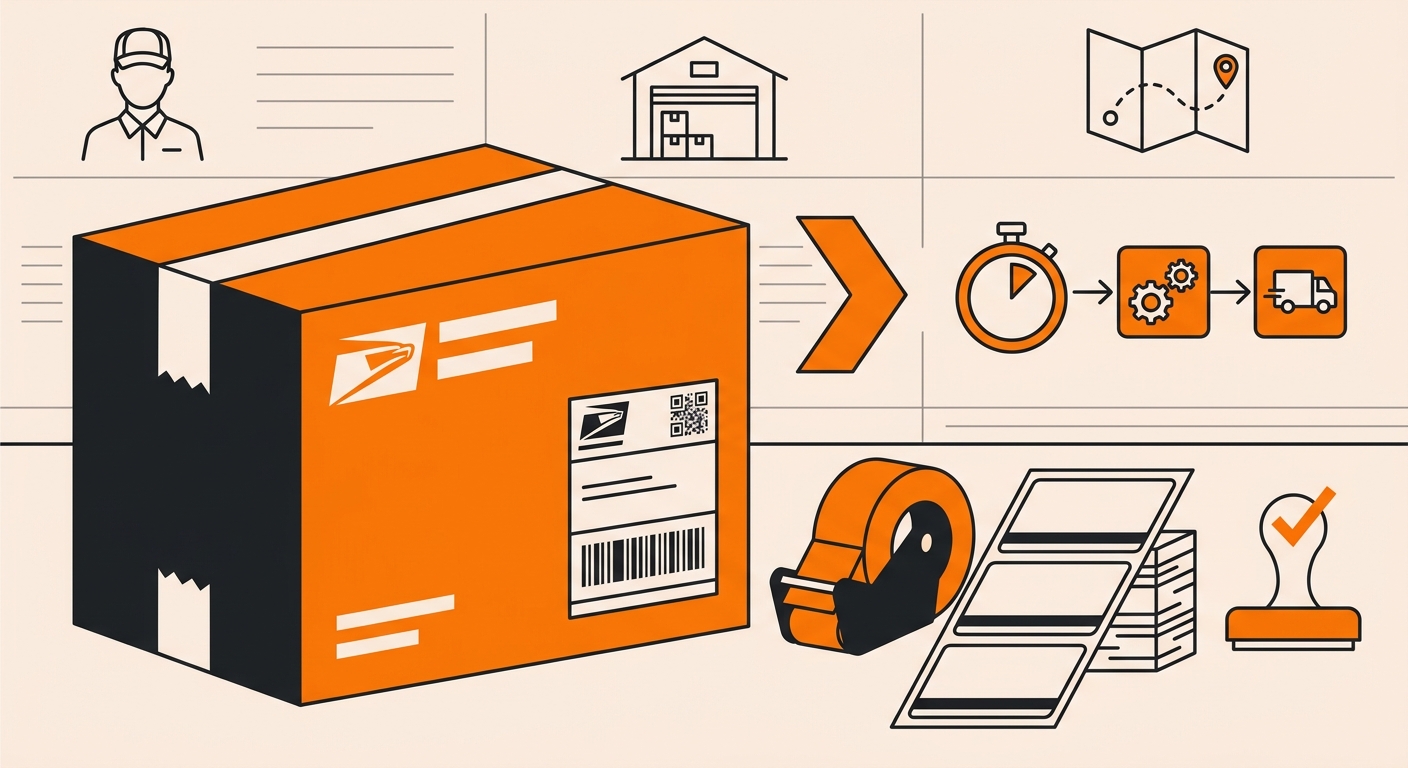
Quick answer: USPS Priority Mail is a domestic shipping service offered by the United States Postal Service that delivers packages within 1–3 business days, depending on origin and destination. It includes tracking, up to $100 of insurance, and free packaging materials, making it one of the most widely used options for eCommerce shipments.
How USPS Priority Mail Works
Priority Mail accepts packages weighing up to 70 lbs and offers two pricing structures: retail rates (paid at the post office) and commercial rates (available through USPS Business accounts or third-party shipping platforms). Commercial rates are consistently lower and are the standard for most online sellers.
Delivery time is not guaranteed in the same way as express services, the 1–3 day estimate is a target, not a contractual commitment. That said, Priority Mail performs reliably for most domestic routes and the included tracking gives both sellers and customers visibility throughout the shipment.
Free Priority Mail boxes, envelopes, and flat-rate packaging can be ordered directly from USPS, which reduces supply costs for high-volume shippers.
USPS Priority Mail Flat Rate vs. Weight-Based Pricing
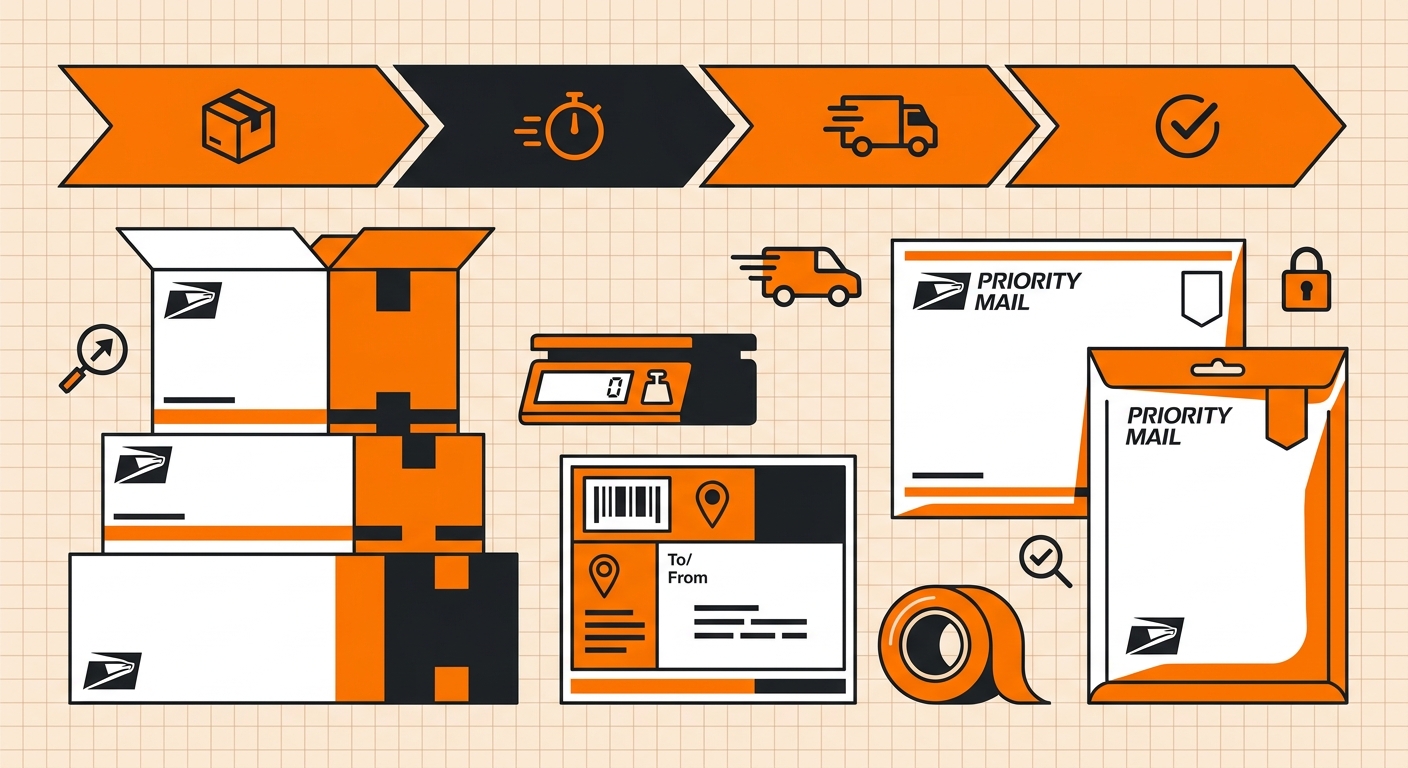
Priority Mail offers two distinct pricing models:
-
Flat Rate: Ship any weight (up to 70 lbs)) in an approved USPS flat-rate box or envelope for a fixed price, regardless of destination. Best for heavy or dense items.
-
Weight-Based (Regional Rate): Pricing is calculated by package weight and distance. More cost-effective for lighter items shipped regionally.
Choosing between the two comes down to package weight and where it’s going. For lightweight shipments traveling long distances, flat rate tends to cost more. For heavier items going short distances, weight-based pricing can be the better call.
How Priority Mail Differs from Priority Mail Express

Priority Mail Express is USPS’s fastest domestic service, offering overnight to 2-day guaranteed delivery with a money-back option. It carries a significantly higher price point and is better suited for time-critical shipments.
Priority Mail sits in the middle ground: faster and more reliable than USPS Ground Advantage, but more affordable than Express.. For most eCommerce sellers, it hits the right balance of speed and cost for standard domestic orders.
When Should a Business Use USPS Priority Mail?
Priority Mail is a strong fit for eCommerce operations shipping packages under 5 lbs domestically, particularly when customers expect delivery within a few days without paying for expedited rates. It works well for apparel, cosmetics, supplements, accessories, and similar goods where a 1–3 day window meets customer expectations.
It’s also worth considering for sellers who ship sporadically or don’t yet have the volume to negotiate discounted rates with private carriers. The commercial pricing available through most order fulfillment platforms closes much of the gap with UPS and FedEx ground services.
For sellers managing high order volume or offering two-day delivery promises, the limitations of Priority Mail’s non-guaranteed timelines can become a friction point.
USPS Priority Mail and Carrier Strategy for eCommerce
No single carrier is the right answer for every shipment, and Priority Mail is best understood as one option within a broader carrier management strategy. Its value shows most clearly for mid-weight domestic packages where speed matters but Express pricing isn’t justified.
Businesses scaling their shipping operations typically find that leaning on a single carrier, including USPS, creates risk. A mixed-carrier approach that routes shipments based on weight, zone, and delivery window tends to produce better outcomes on both cost and customer experience.