

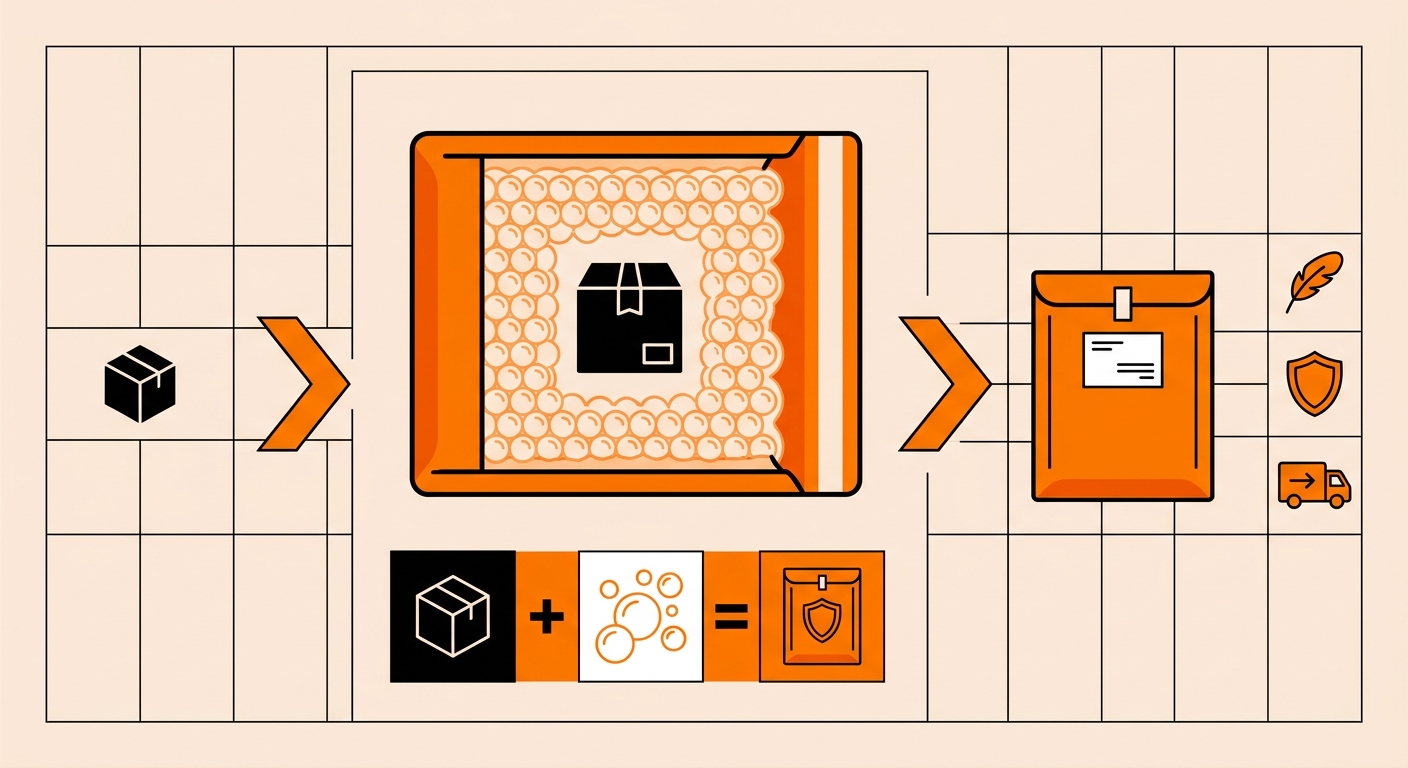
How Padded Mailers Work
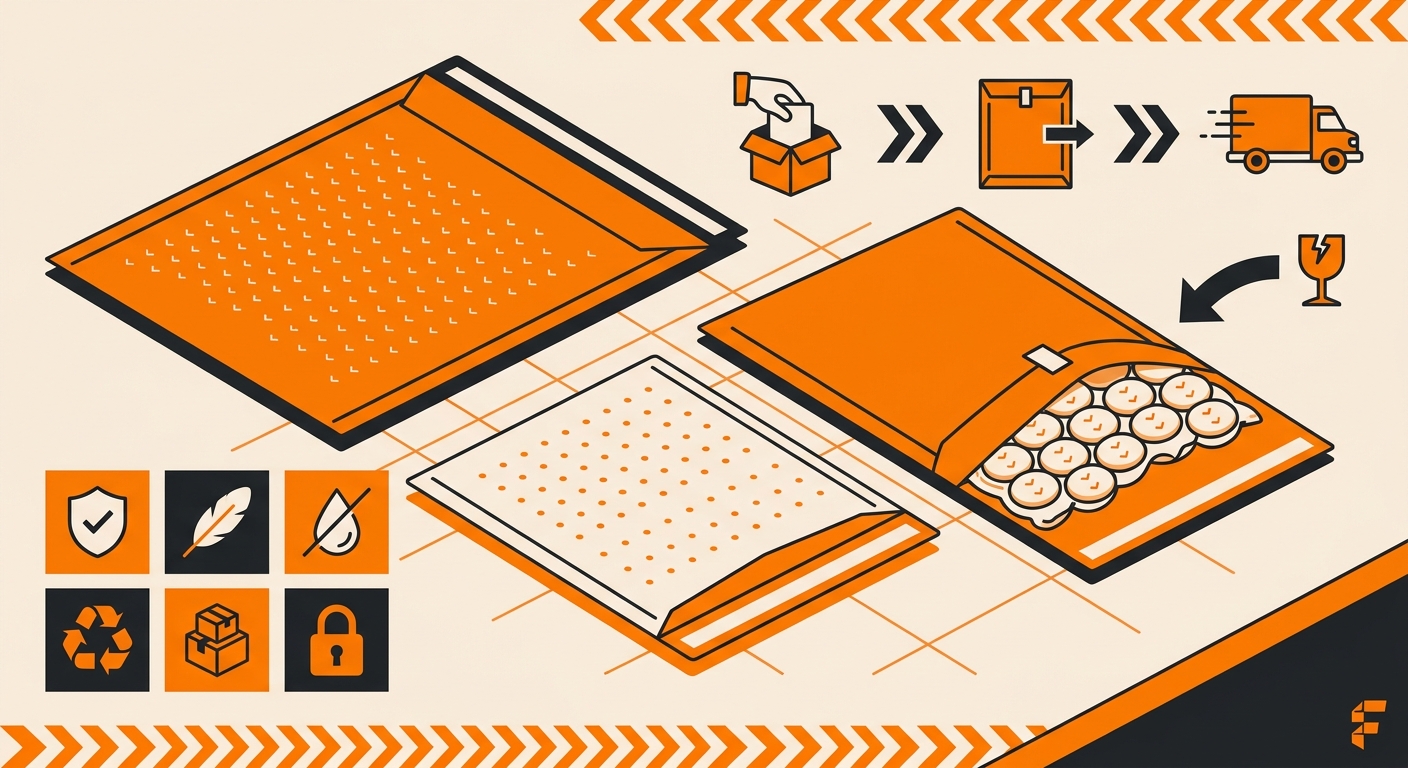
The outer shell of a padded mailer is usually kraft paper or a poly (plastic) material. The inner lining, most commonly bubble cushioning, absorbs minor impact and prevents surface damage from shifting during handling.
They come in standardized sizes, typically ranging from 4″x8″ to 14.25″x20″, and are self-sealing in most modern variants. The two main types are:
-
Kraft padded mailers: paper exterior, recyclable, better for branded unboxing experiences
-
Poly bubble mailers: plastic exterior, moisture-resistant, lower cost per unit
Both types are available in custom print options which matters for brands that treat packaging as a brand touchpoint.
Common Use Cases for Padded Mailers
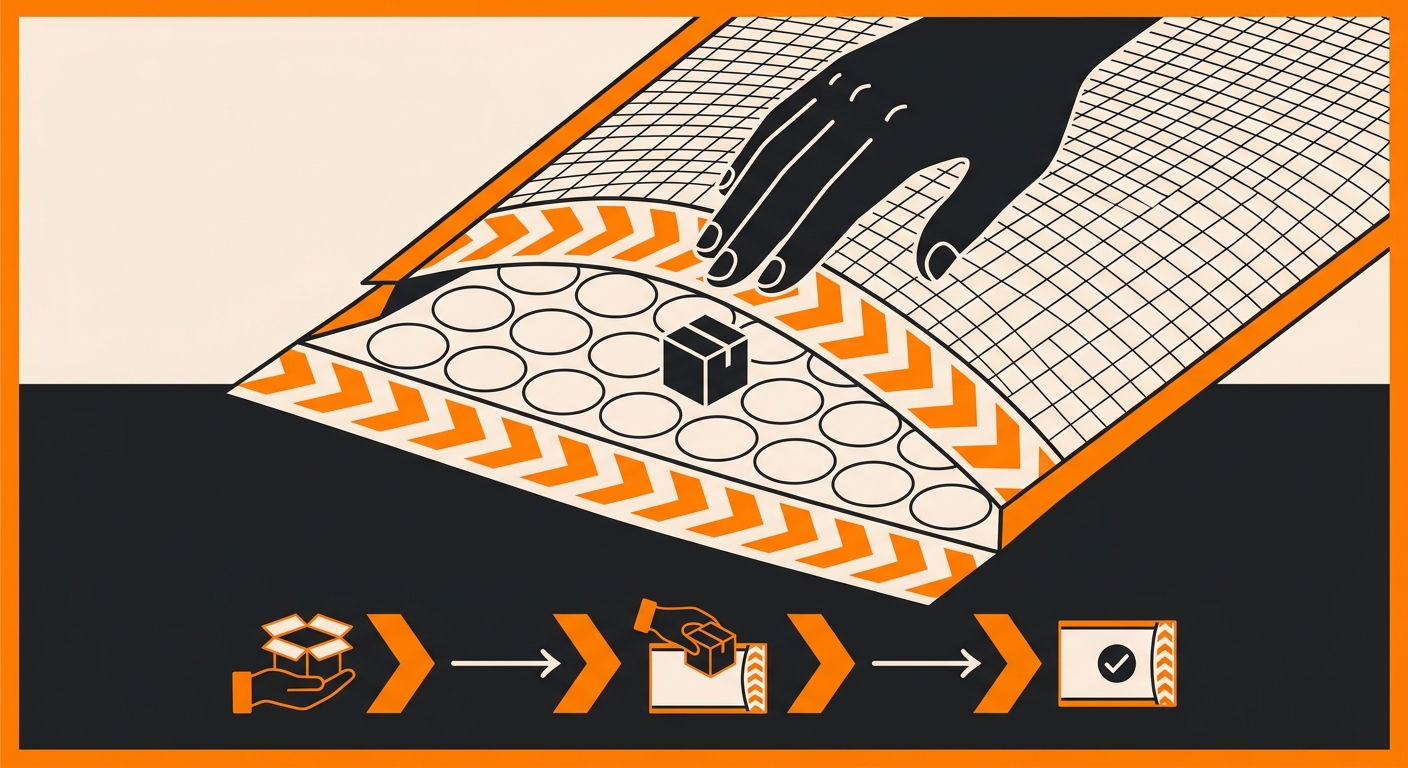
Padded mailers work well for items that need surface protection but don’t require rigid structural support. Common use cases in eCommerce fulfillment include:
-
Apparel and accessories: folded clothing, belts, scarves, flat jewelry
-
Books and media: paperbacks, DVDs, card decks
-
Cosmetics and health products: lipsticks, small supplements, skincare samples
-
Electronics accessories: charging cables, phone cases, small peripherals
-
Subscription box inserts: individual items within a larger shipment
The key constraint: padded mailers are not appropriate for items that are rigid, oddly shaped, or genuinely fragile. Glass, ceramics, or anything that needs structural spacing from all sides should go in a corrugated box with additional dunnage.
Padded Mailers vs. Corrugated Boxes: Cost Comparison
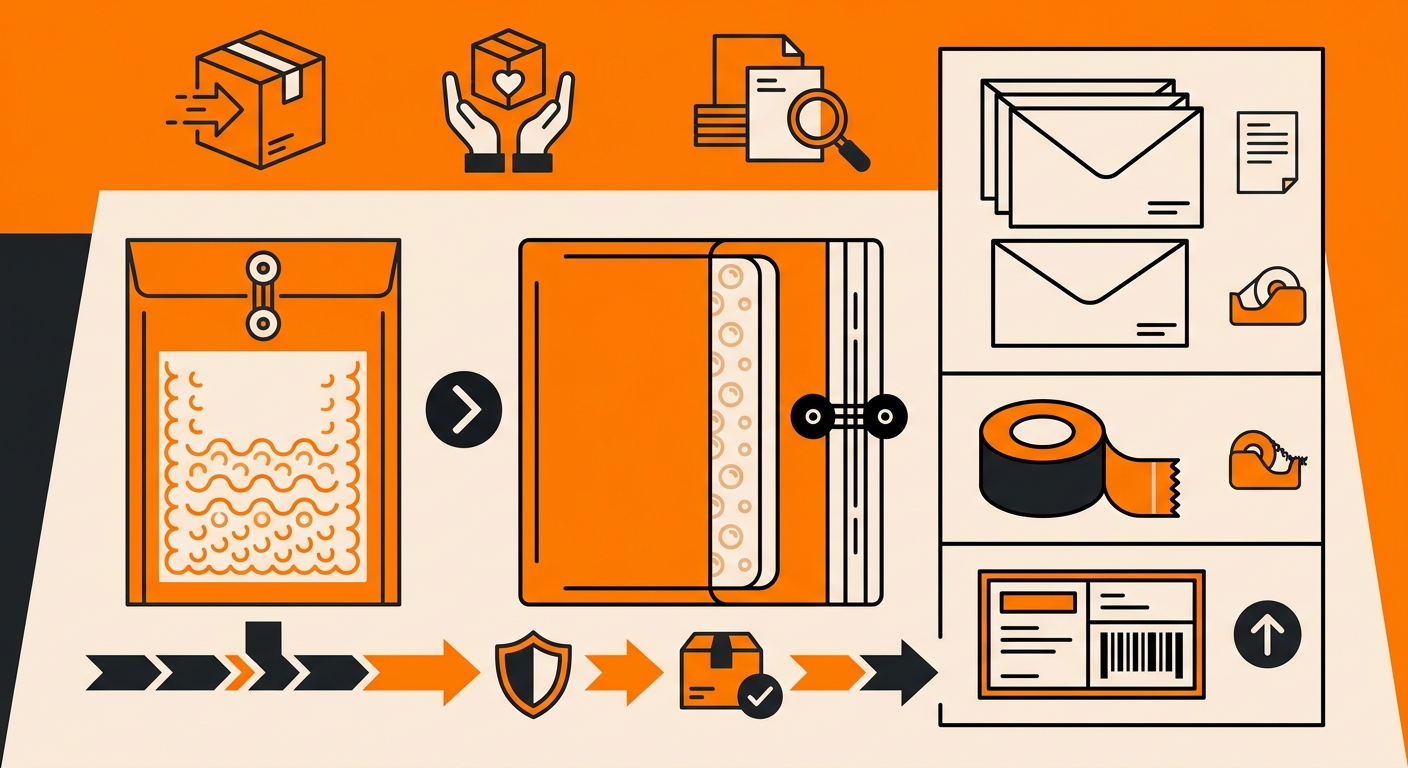
A tidy shipping workspace featuring a padded mailer placed next to standard envelopes, packing tape, and a shipping label for
The cost difference is meaningful at scale. Here’s a general benchmark:
|
Padded Mailer |
Corrugated Box |
|
|---|---|---|
|
Unit cost (standard size) |
$0.15–$0.80 |
$0.50–$2.50+ |
|
Dimensional weight impact |
Low |
Higher |
|
Packing labor time |
Faster |
Slower |
|
Protection level |
Moderate |
High |
|
Branded customization |
Limited |
Extensive |
Padded mailers also tend to qualify for first-class or ground advantage rates with USPS due to their low weight and flat profile, which reduces the cost per order in high-volume operations.
The trade-off is protection. For any product where a return due to damage costs more than the savings on packaging, a box is the right call.
When Padded Mailers Make Sense for Your Fulfillment Operation
The decision comes down to product dimensions, fragility, and volume. Padded mailers are a practical default for soft goods, flat items, and anything under roughly 1 lb that doesn’t need structural support.
For brands shipping at volume, the per-unit savings on mailers add up quickly,, especially when combined with efficient pick and pack processes that minimize handling time per order. The right packaging choice isn’t just about protection; it’s a lever on your overall fulfillment cost structure.