

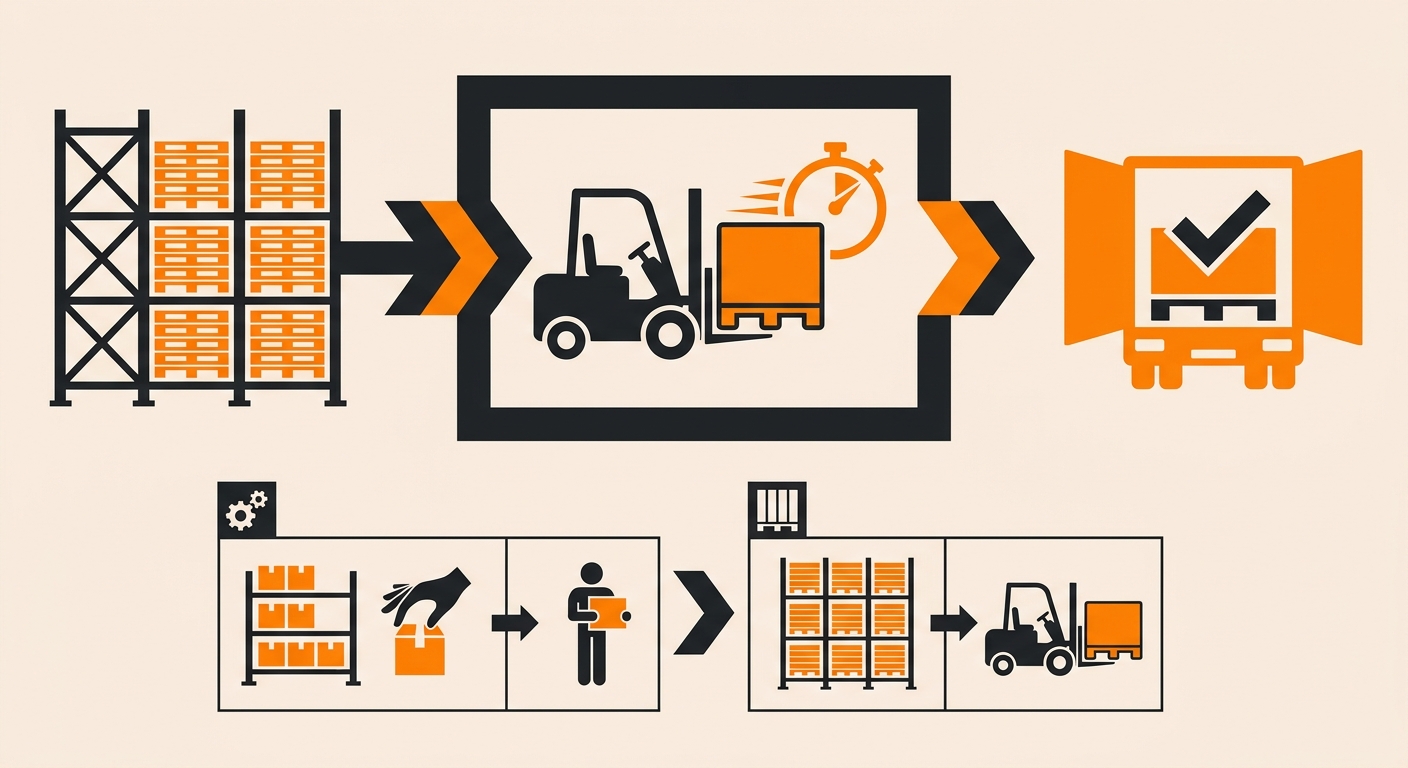
How Pallet Picking Works
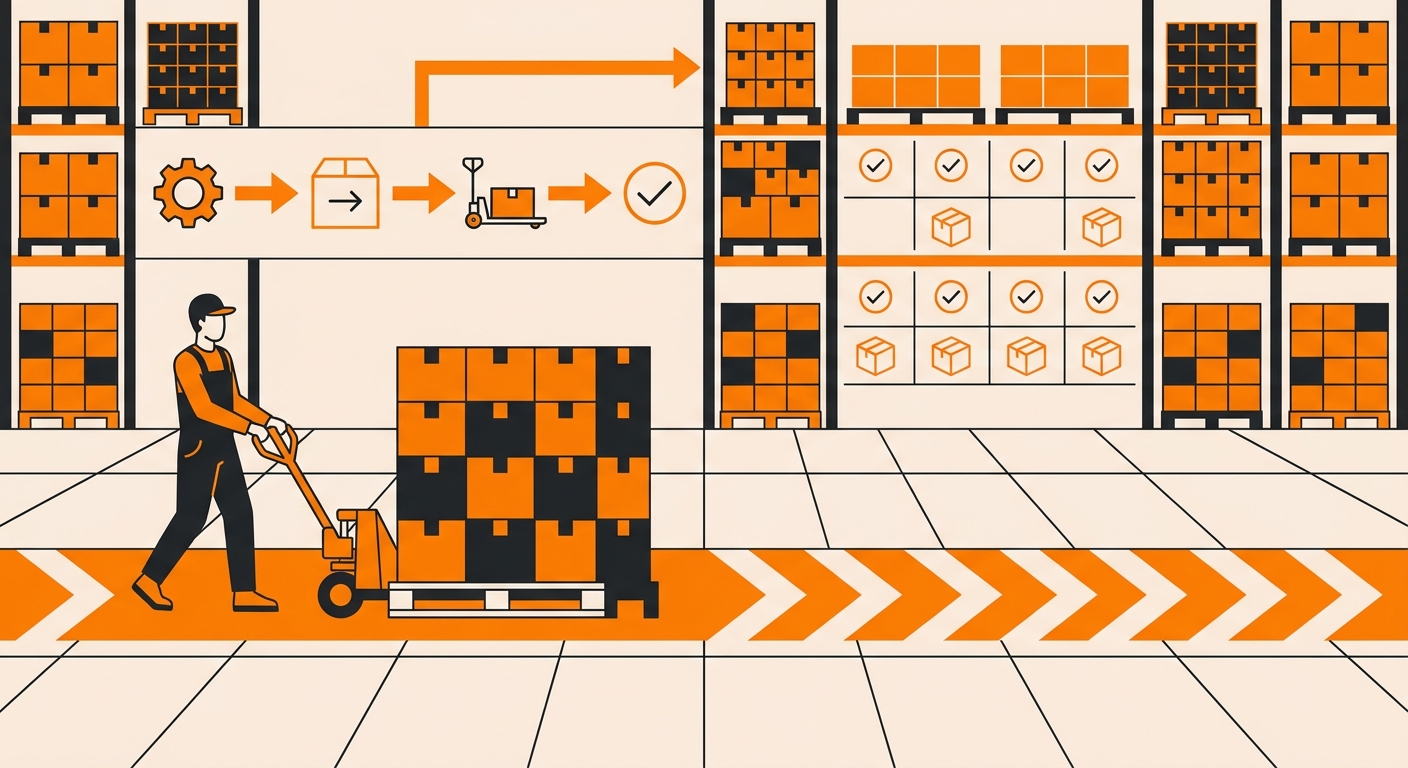
Unlike piece picking or case picking, pallet picking skips granular item selection entirely. A picker receives a pick instruction, typically through a warehouse management system (WMS), identifying the pallet location and destination. The entire pallet is then lifted and transported without breaking it down.
This makes the process fast and straightforward, but it only works when the demand unit matches the storage unit. In other words, pallet picking is only viable when an order calls for a full pallet’s worth of a single SKU or product group.
The process typically follows this sequence:
-
A pick order is generated by the WMS;
-
The picker locates the pallet in the warehouse (usually in bulk or floor storage);
-
The pallet is lifted using a forklift or pallet jack and moved to the designated area;
-
The pallet is logged as fulfilled and staged for outbound shipping.
Equipment Used in Pallet Picking
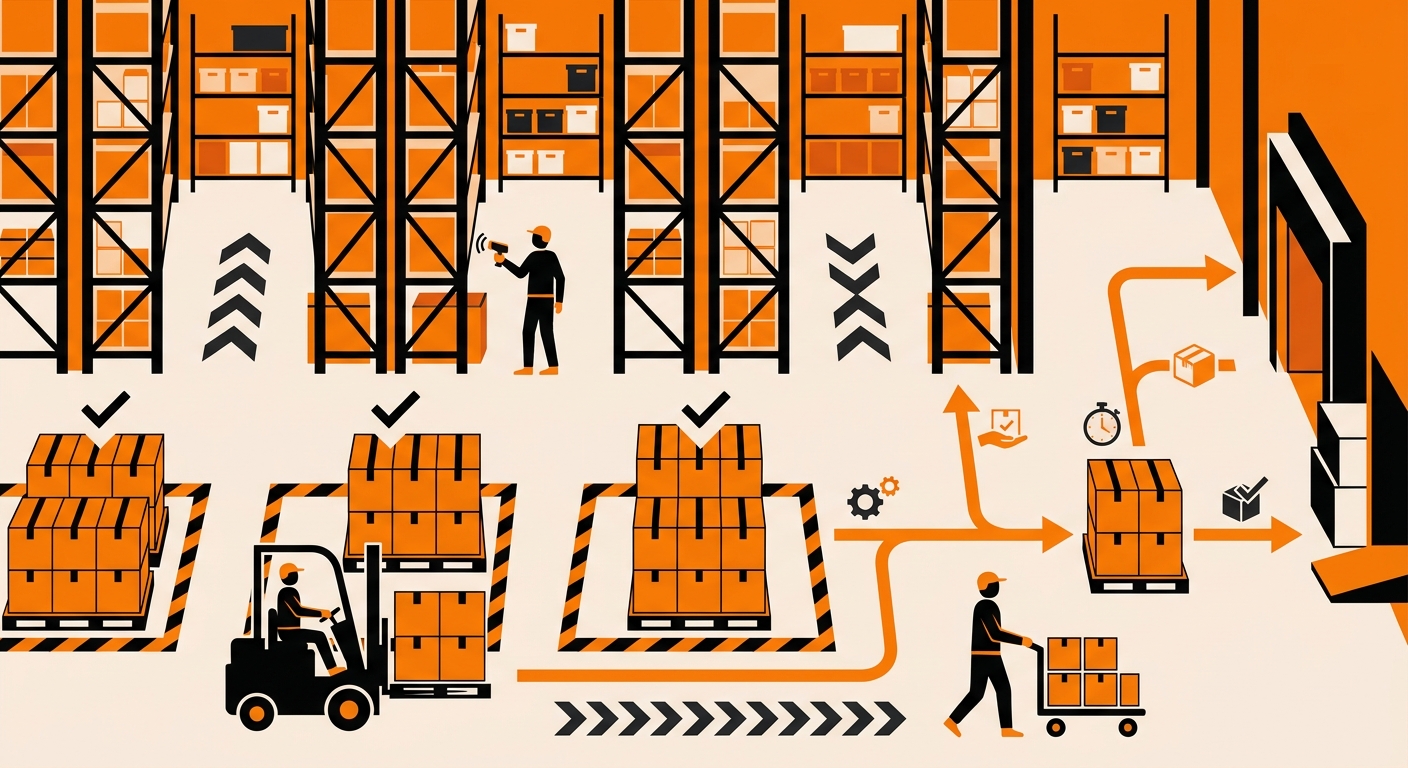 fulfillment center with multiple pallets staged in designated picking zones, labeled shelving in the backgro”>
The equipment required depends on warehouse layout, pallet weight, and volume of picks. The most common options include:
-
Counterbalance forklifts: the standard choice for moving heavy pallets across longer distances within a warehouse;
-
Reach trucks: used in narrow-aisle racking systems where standard forklifts can’t maneuver:
-
Electric pallet jacks: for shorter moves, loading docks, or lower-height storage areas;
-
Automated guided vehicles (AGVs): increasingly used in high-volume or automated fulfillment centers to reduce manual labor.
For operations integrated with a warehouse management system, pick confirmation is often handled via barcode scanning or RFID, ensuring inventory accuracy throughout the process.
When Pallet Picking Makes Sense
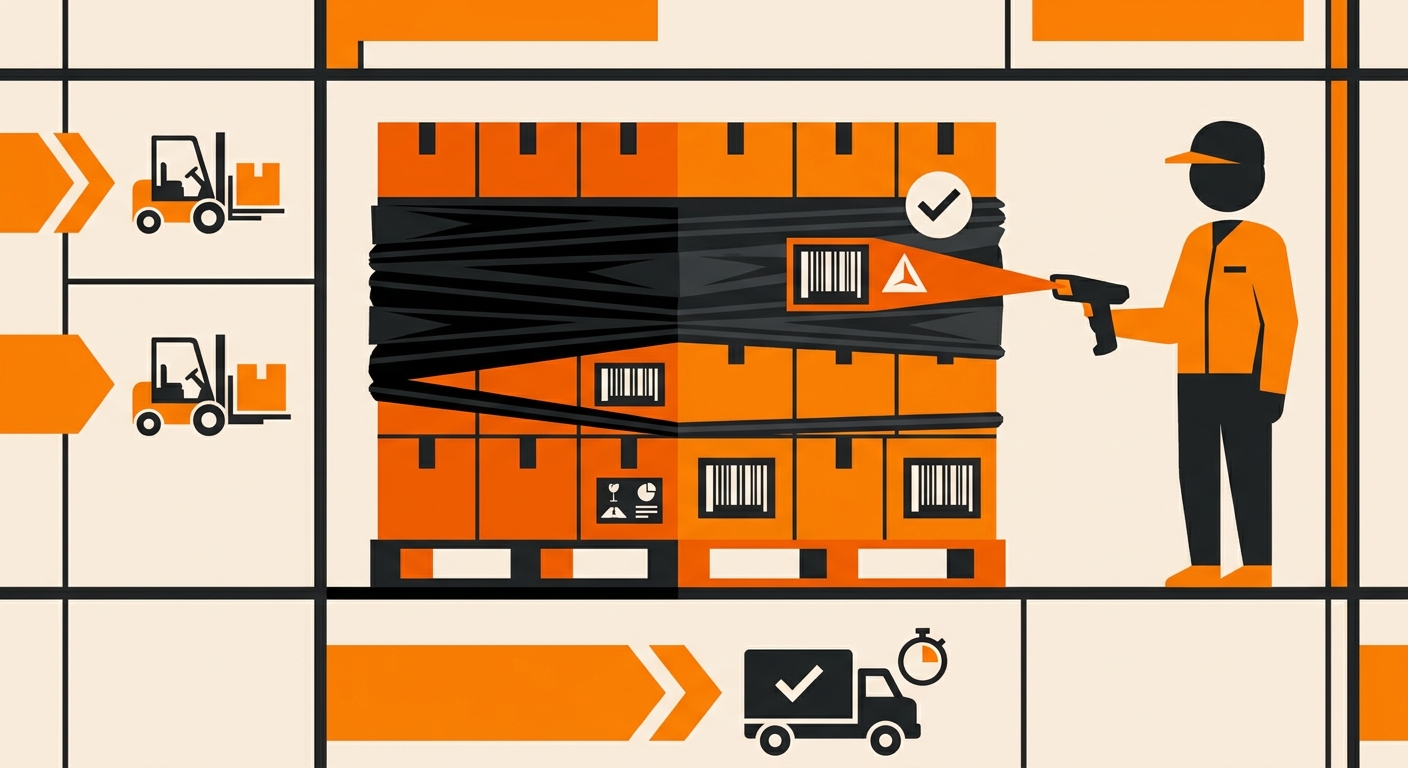
Pallet picking is the right method when order volume, product type, and fulfillment model align with bulk movement. It is most commonly used in:
-
B2B and wholesale fulfillment, where large retailers or distributors order full pallets of a single product;
-
Retail replenishment; where store distribution centers receive bulk stock to restock shelves;
-
Cross-docking operations, where pallets arrive from a supplier and move directly to an outbound vehicle with minimal storage time;
-
Raw material handling in manufacturing, where components are moved between production stages by the pallet.
It is not suited for eCommerce direct-to-consumer (DTC) orders, where individual items or small multi-SKU packages are the norm. In those cases, pick and pack fulfillment or case picking handles the order far more efficiently.
Pallet Picking and Fulfillment Efficiency
At scale, pallet picking significantly reduces the time and labor cost per unit compared to piece-level picking. Because each pick event moves a large quantity of product in one motion, throughput is high and error rates are low. There are fewer touch points where mistakes can occur.
For businesses shipping in bulk, whether to retail partners, warehouses, or wholesale buyers, having a 3PL with the racking infrastructure, equipment, and WMS capabilities to handle pallet-level fulfillment is critical to maintaining speed and accuracy as order volumes grow.