

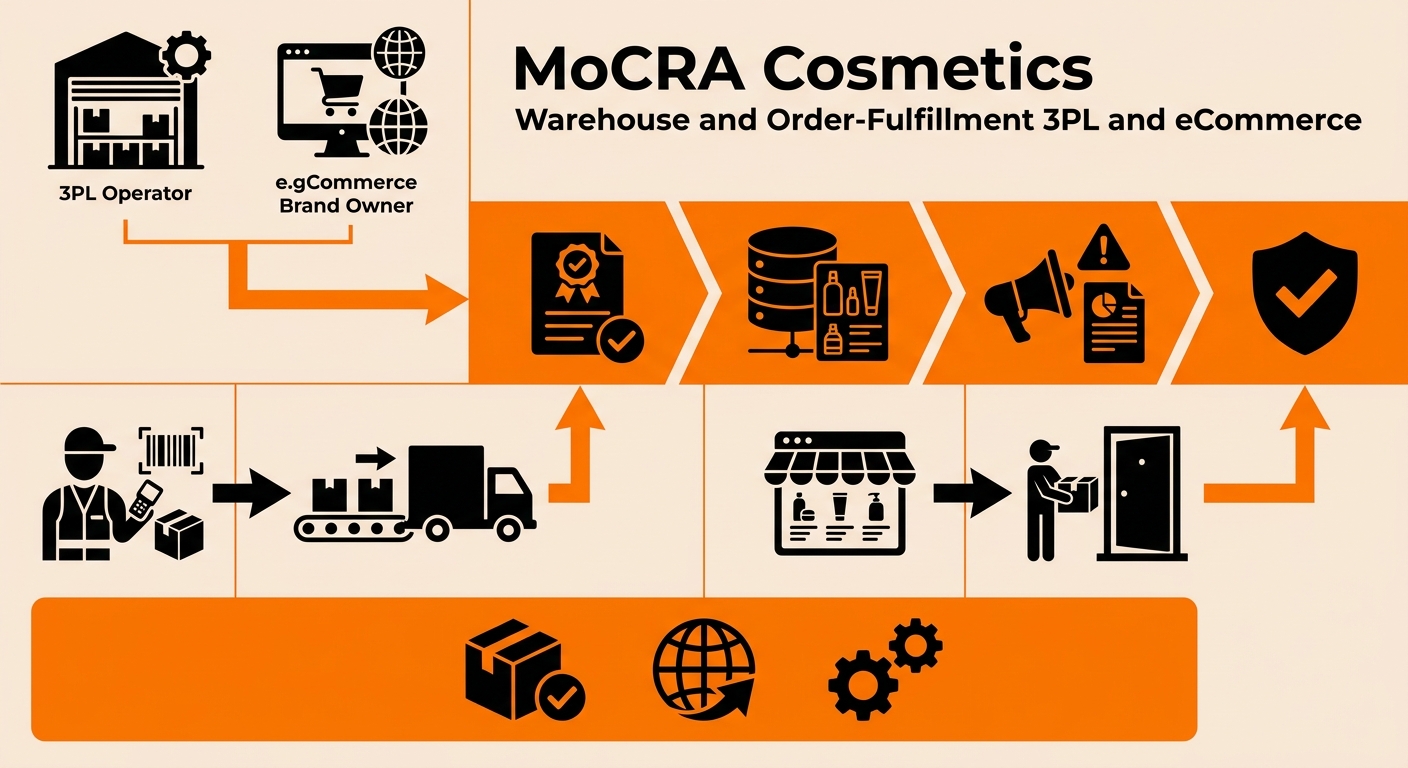
MoCRA Cosmetics refers to cosmetic products covered by the Modernization of Cosmetics Regulation Act of 2022, which expanded FDA authority over the cosmetics industry and introduced new requirements for facility registration, product listings, safety records, labeling, and adverse event reporting.

MoCRA Cosmetics Regulation
The Modernization of Cosmetics Regulation Act of 2022 is the first major overhaul of U.S. cosmetics law since 1938. For product-based eCommerce brands, it changes what “ready to ship” actually means.
If you sell cosmetics or anything the FDA classifies as a cosmetic, your cosmetics fulfillment operation is now part of your compliance chain.
What MoCRA Actually Requires
MoCRA gives the FDA authority it never had before. Core requirements include:
-
Facility registration with the FDA by December 29, 2023, plus product listing for every cosmetic manufactured or processed for U.S.
-
Serious adverse event reporting within 15 business days of receiving a report
-
Safety substantiation documentation kept on file and available to the FDA on request
-
Labeling accuracy requirements, including fragrance allergen disclosure at 0.01% or more in leave-on products
Why It Matters for Your Fulfillment Operation
MoCRA doesn’t just affect cosmetics manufacturers. If you’re providing beauty fulfilment or shipping personal care products through a 3PL, labeling non-compliance can trigger a hold at the distribution center before a single unit ships.
The regulatory angle is direct: products missing required facility registration or safety reporting documentation can be flagged during inbound receiving.
-
Non-compliant SKUs held during inbound can delay fulfillment by 3-7 business days per incident
-
Returns triggered by labeling errors during peak seasons like Q4 can spike reverse logistics costs by 15-20%
Getting this right upstream protects your throughput downstream.
How MoCRA Cosmetics Compliance Actually Works
MoCRA doesn’t operate as a single checkpoint. It runs as a series of required actions brands must complete before, during, and after a product reaches market. Here’s the actual mechanic:
-
Facility Registration: Every domestic or foreign facility that manufactures or processes cosmetics sold in the U.S. must register with the FDA. Registration renews biennially, and the FDA assigns a unique registration number that ties all subsequent product listings to that facility.
-
Product Listing Submission: After facility registration, brands submit a product listing for each cosmetic sold in the U.S.
-
Safety Substantiation: Before a product ships, the responsible person must hold documentation substantiating product safety. The FDA doesn’t pre-approve formulas but can request this file during an inspection.
-
Serious Adverse Event Reporting: If a consumer reports a serious adverse event linked to a product, the responsible person must file a report with the FDA within 15 business days, and the FDA logs it against the product listing on file.
-
Label Compliance Review: Contact information for the responsible person must appear on the label. For fragrance allergens, the FDA is still finalizing disclosure rules, so brands should monitor guidance updates.
Key Components of MoCRA Cosmetics Compliance
Facility Registration
Facility registration is your non-negotiable entry point for MoCRA compliance. It’s the first major hurdle. Any domestic or foreign manufacturer, packer, or distributor with products sold in the U.S. must register with the FDA. You’ll have to renew that registration every two years.
Product Listing
Product listing ties each SKU to a registered facility. You submit the product name, applicable cosmetic category, and every ingredient present; this is what the FDA uses to assess market risk across the category.
Ingredient Disclosure
Ingredient disclosure under MoCRA goes beyond the label. Fragrance allergens above defined concentration thresholds must be individually identified in product listings, not buried under a generic “fragrance” entry.
Serious Adverse Event Reporting
Serious adverse event reporting requires brands to notify the FDA within 15 business days of receiving a report of a serious injury linked to a product. That 15-day window starts the moment your company receives the consumer complaint, not when you verify it.
Keep Your Cosmetics Fulfillment MoCRA-Ready
Compliance issues can slow fulfillment, create inventory holds, and increase operational risk. Fulfyld helps beauty and personal care brands maintain accurate inventory management, lot tracking, and fulfillment processes that support regulatory requirements.
Talk to a Fulfyld specialist to build a cosmetics fulfillment operation that supports growth without creating compliance bottlenecks.