

What Is Recurring Fulfillment?

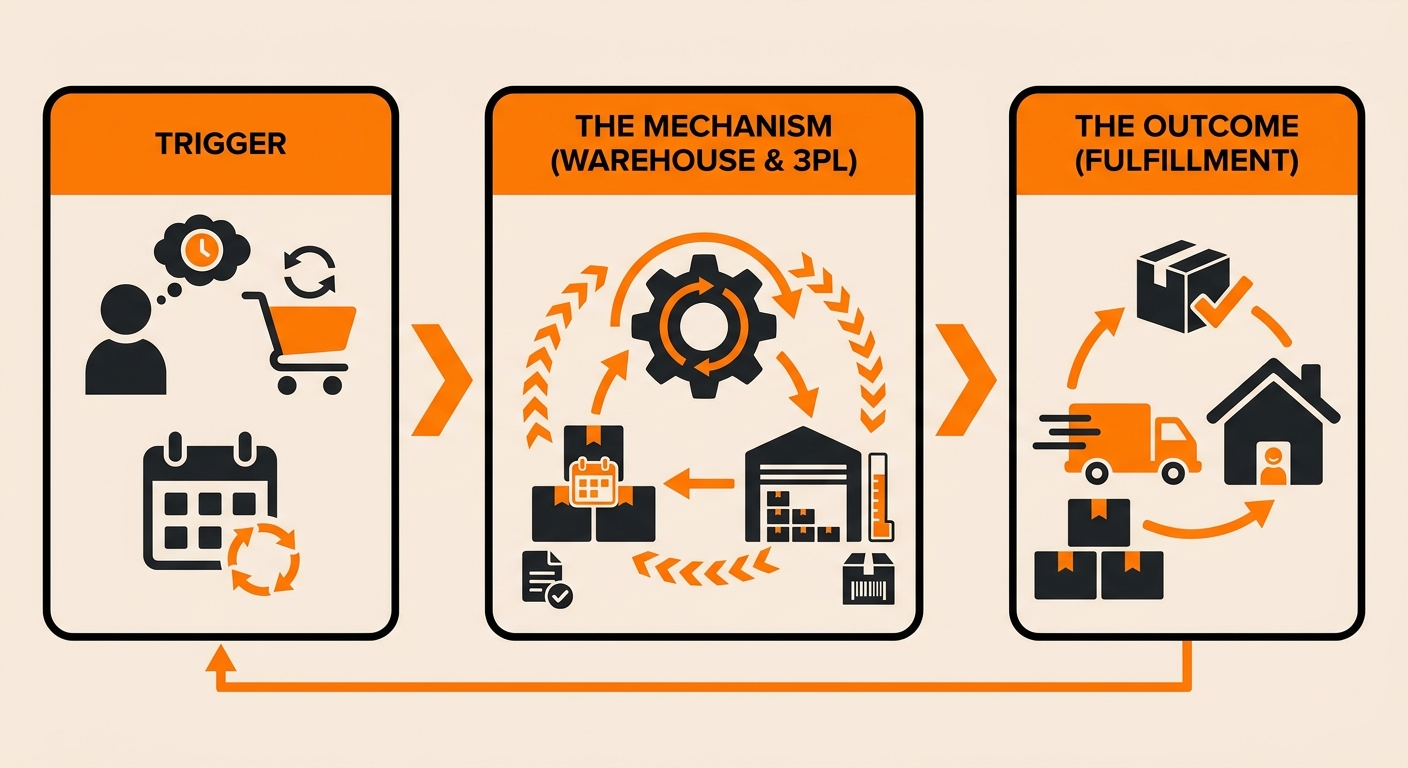
Recurring fulfillment is the process of picking, packing, and shipping the same set of orders on a scheduled, repeating basis rather than treating each order as a one-off event.
eCommerce brands running subscription boxes, monthly product clubs, or scheduled B2B replenishment programs rely on this model to keep order flow predictable.
Your warehouse team knows what’s coming, your carrier pickups are pre-scheduled, and your inventory requirements are forecasted against a known ship date rather than guessed.
The core distinction: recurring fulfillment is planned volume, not reactive volume. That shift changes how you staff, how you stock, and how you measure fulfillment performance.
How Recurring Fulfillment Works
The process runs through four distinct stages, each with a specific system hand-off that keeps orders moving on schedule without manual intervention between cycles.
-
Order generation via OMS trigger: Your order management system fires a scheduled order at a predefined interval, weekly, monthly, or custom cadence. The OMS pulls subscriber data, confirms active status, and creates a pick ticket automatically.
-
Inventory reservation and slotting: The warehouse management system reserves stock against the upcoming batch before pick-and-pack begins. High-velocity SKUs are slotted to primary pick locations; lower-volume items stay in reserve storage until the WMS routes a picker to them.
-
Batch pick-and-pack execution: Pickers work in batch mode, pulling all units for a single SKU across hundreds of orders in one pass. This is the most common variant; zone picking is an alternative for large warehouses with distinct product categories.
-
Carrier selection and label generation: The WMS applies your pre-configured shipping rules (carrier, service level, weight thresholds) and generates labels in bulk. Orders ship within your agreed fulfillment SLA, typically same-day or next-day for batches closing before the carrier cutoff.
What Is Skip-Month Logic?
Skip-month logic allows subscribers to pause or skip a scheduled shipment without canceling their subscription entirely.
For example, a customer receiving a monthly supplement box may choose to skip July’s shipment while remaining active for August. The subscription platform updates the next fulfillment date automatically, preventing unnecessary inventory allocation and shipping charges.
A recurring fulfillment program should support:
-
Customer-initiated shipment skips
-
Pause and resume functionality
-
Automatic billing adjustments
-
Updated inventory forecasting based on skipped orders
Without skip-month logic, fulfillment teams may process shipments that customers no longer want, increasing return rates and support requests.
Key Components of Recurring Fulfillment
Fulfillment Schedule
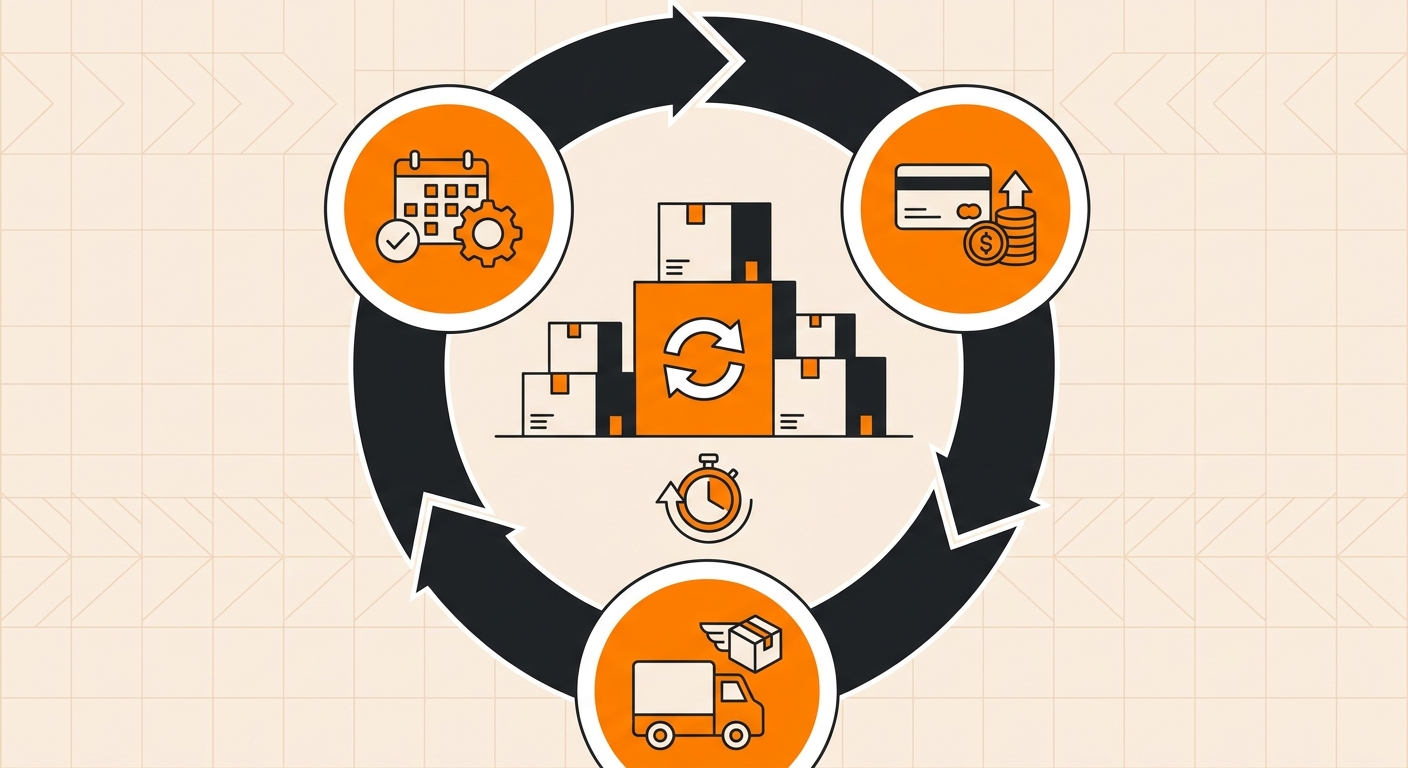
The fulfillment schedule defines exactly when orders ship, weekly, bi-weekly, or monthly, and anchors every downstream operation to a fixed cadence. Without a locked schedule, your warehouse can’t pre-stage inventory or allocate labor efficiently.
Standing Order Configuration
A standing order is a pre-built order template that fires automatically at each cycle, pulling the same SKUs, quantities, and packaging instructions every time. This removes manual order entry from the equation and cuts processing errors significantly.
Inventory Reservation Logic

Your WMS must hold committed stock against future cycle dates rather than releasing it to general available-to-promise inventory. Without reservation logic, a spike in one-time orders can deplete stock your subscribers are already counting on.
Carrier Rate and Service Assignment
Each recurring shipment needs a pre-assigned carrier service tied to the order template, so rate shopping doesn’t delay fulfillment at cycle time. Locking the service level upfront also protects your SLA commitments to subscribers.
Best Practices for Recurring Fulfillment
-
Set minimum inventory thresholds per SKU before each fulfillment cycle runs, not after a stockout occurs.
-
Confirm carrier rate agreements are current before locking in a recurring schedule for the quarter.
-
Audit your SKU list every 30 days and remove discontinued products from active fulfillment templates immediately.
-
Require written confirmation from your 3PL when cycle volumes exceed your standard SLA by more than 20%.
-
Avoid bundling slow-moving SKUs into recurring orders without a 60-day sell-through review to prevent dead stock accumulation.
-
Test your order-management system’s auto-replenishment triggers on a single SKU before applying the logic across your full catalog.
Need a 3PL That Supports Subscription Fulfillment?
Recurring fulfillment only works when your systems, inventory, and shipping operations stay synchronized across every cycle. A 3PL with experience managing subscription programs, standing orders, and skip-month requests can help reduce fulfillment errors while keeping recurring shipments on schedule.
Contact Fulfyld today to learn how a fulfillment strategy built for recurring orders can support your growth while delivering a better customer experience.