

It’s not kitting, and it’s not contract manufacturing. It sits between those two, and confusing it with either leads to misquoted labor costs and missed SLAs.
What Is Subassembly in Fulfillment
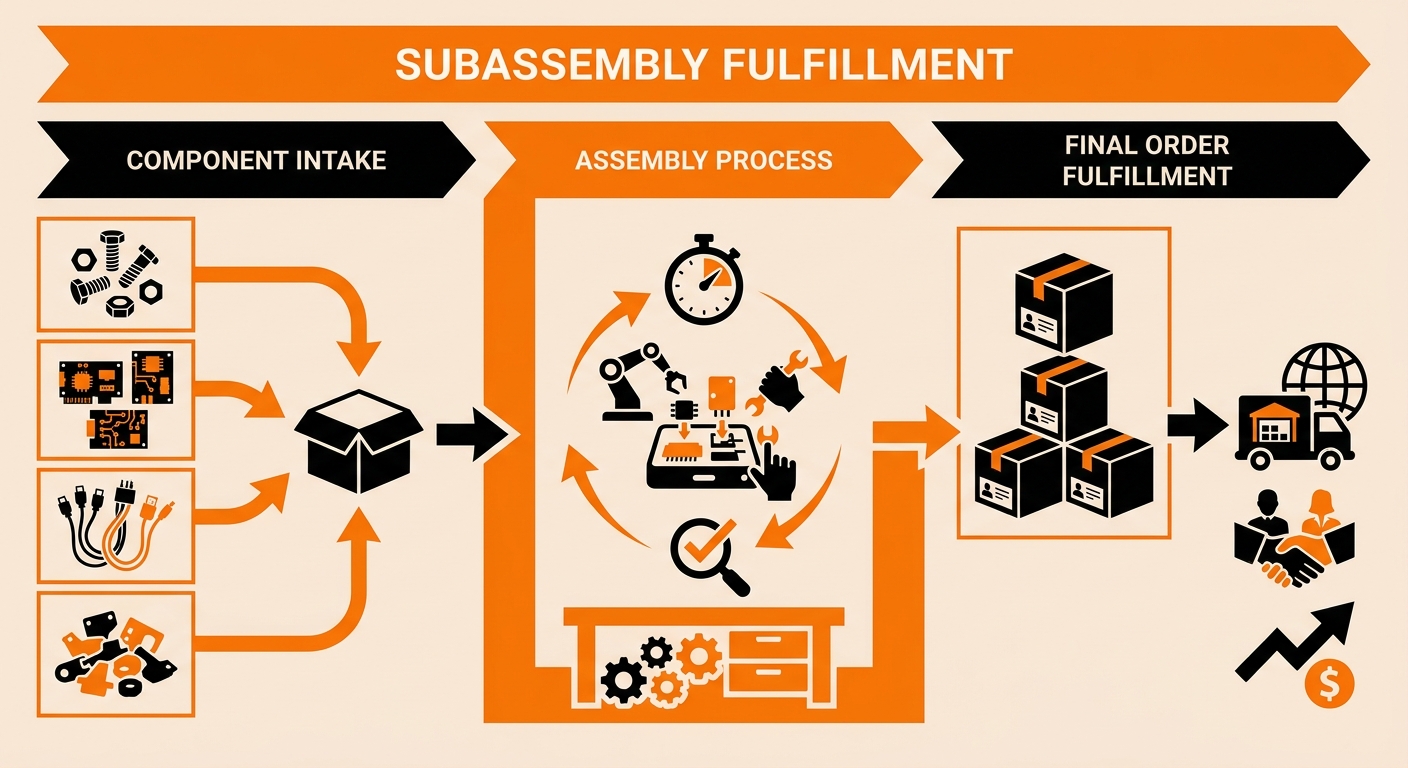
Subassembly fulfillment takes place before customer orders are picked and packed. Instead of assembling products on demand, the warehouse builds finished units in advance according to a bill of materials (BOM) and stores them as ready-to-ship inventory.
This approach is common for bundled products, hardware kits, subscription boxes, electronics accessories, and other multi-component items that benefit from being assembled before orders enter the fulfillment queue.
How It Works
-
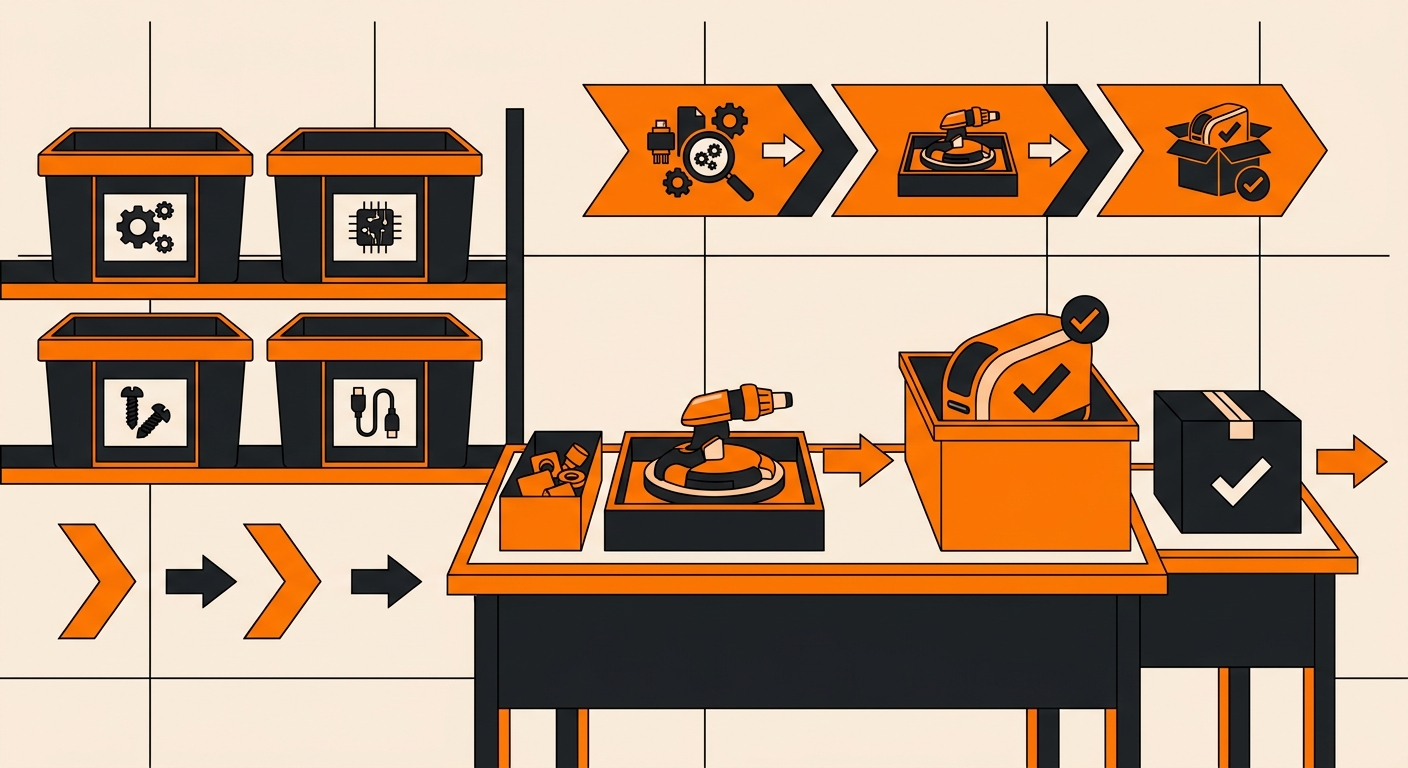
Work order creation in the WMS: A warehouse management system generates a work order that specifies which component SKUs are needed, the required quantities, and the target finished-unit count. This triggers a pick list for the assembly station.
-
Component picking and staging: Pickers pull individual parts from their storage locations and deliver them to a dedicated kitting or assembly area. The WMS confirms each component scan before any assembly begins, preventing short-kits.
-
Physical assembly and quality check: Workers combine components according to a build sheet, a documented instruction set that defines configuration, sequence, and inspection criteria. Every finished unit is checked against a minimum quality standard before it’s labeled.
-
Inventory adjustment and receiving the finished SKU: Once assembled, the WMS decrements the raw-component inventory and creates a new inventory record for the finished subassembly SKU. This keeps stock counts accurate across both inbound components and outbound units.
-
Order routing to the outbound queue: The finished subassembly is slotted for outbound fulfillment, where the OMS matches it to open orders and assigns a pick path. Batch routing is the most common method at scale; zone-based routing is an alternative for larger facilities with dedicated assembly cells.
Key Components of Subassembly Fulfillment
Bill of Materials (BOM)
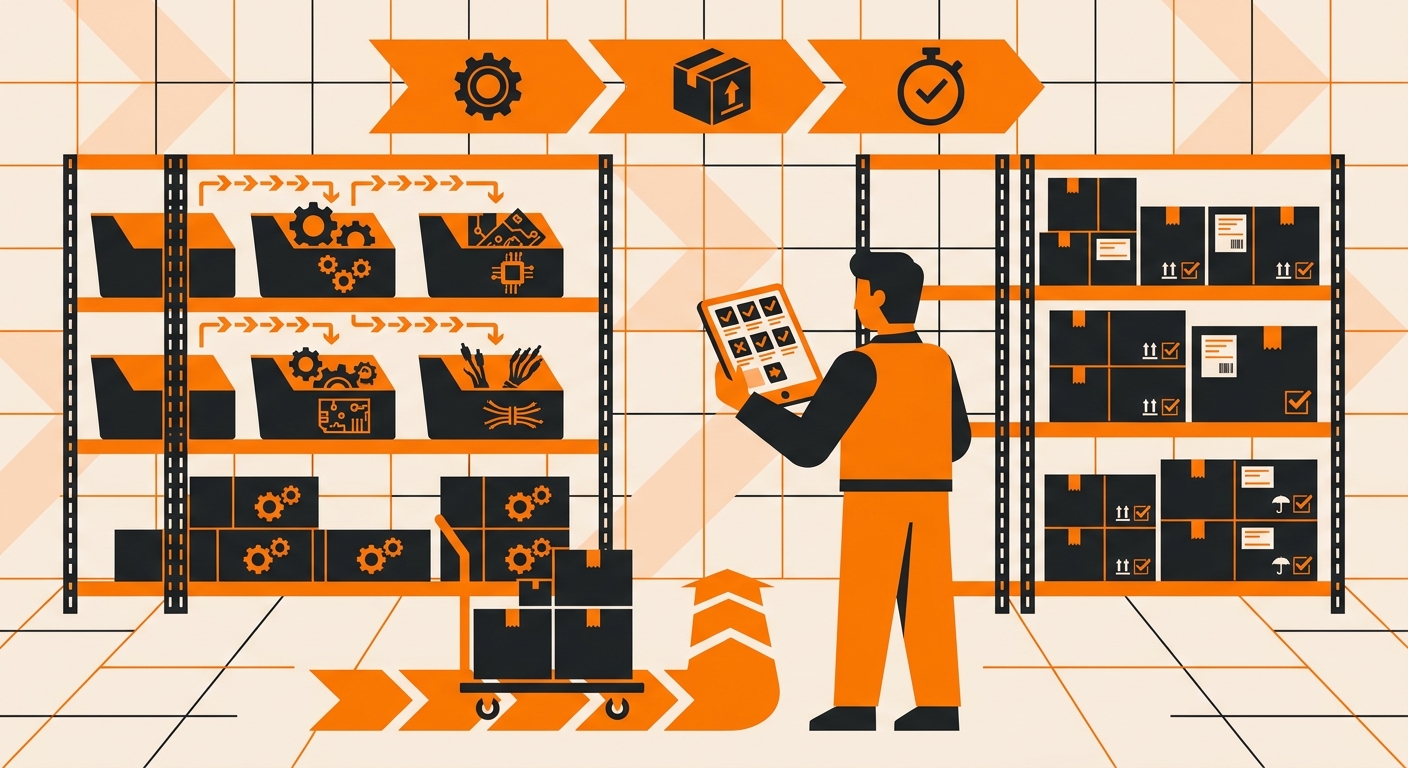
The bill of materials lists each component SKU, required quantity, and acceptable substitutes, so warehouse staff never guess what goes into a unit. Without a clean BOM, your error rate climbs fast.
Component Inventory Staging
Before assembly begins, all required parts must be pulled from storage and staged at a dedicated work station. Staging separates raw component inventory from finished-goods inventory, which keeps your WMS counts accurate throughout the build process.
Assembly Work Instructions
Step-by-step work instructions define the exact sequence for building each subassembly, including torque specs, orientation requirements, or labeling order. Even a three-part kit needs documented steps, because staff turnover will expose any process that only lives in someone’s head.
Quality Control Checkpoint
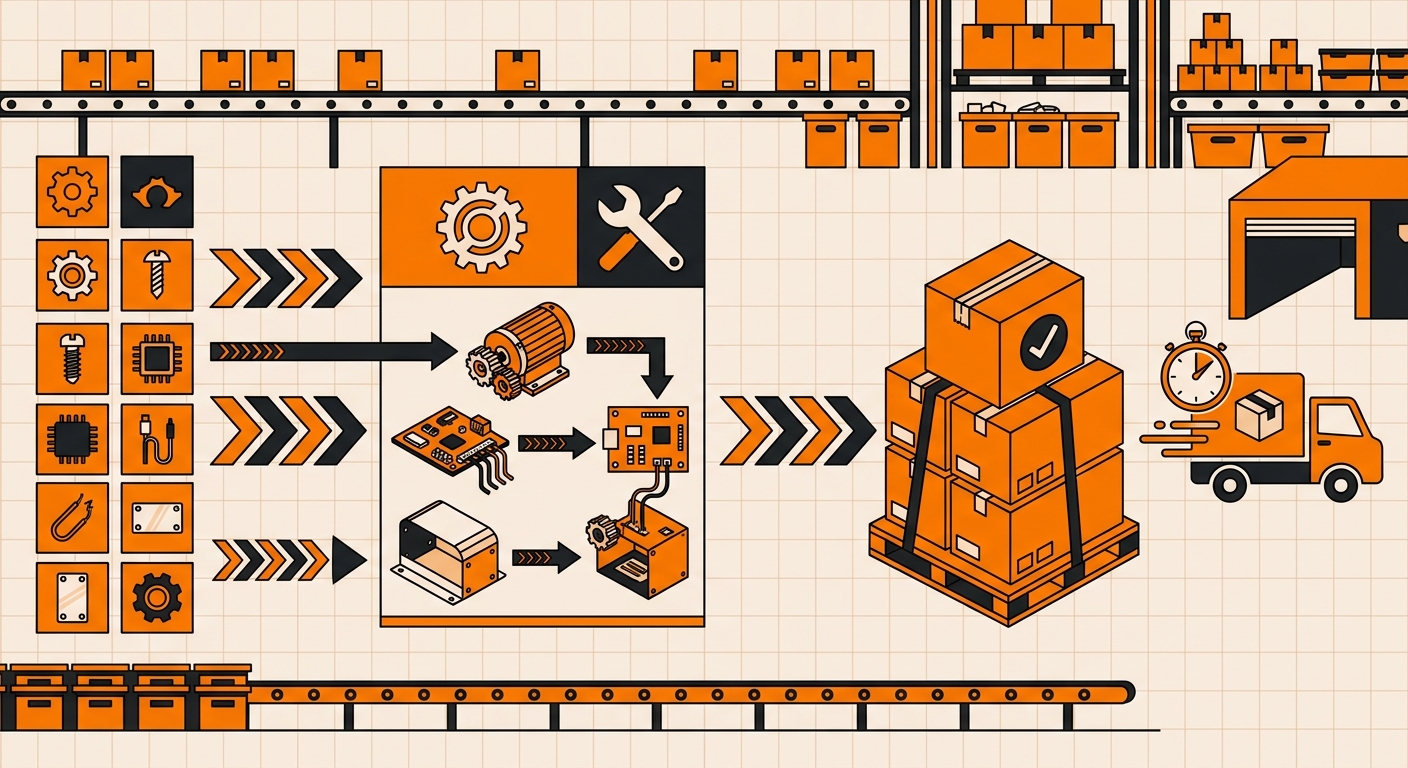
A QC checkpoint after assembly confirms each unit meets spec before it enters finished inventory. This is the single step most brands skip when volumes are low, and the one they regret most when a defect batch ships to 400 customers.
Best Practices for Subassembly Fulfillment
-
Define a bill of materials for every subassembly SKU before it enters the pick queue, so pickers never guess at component counts.
-
Audit component inventory against finished subassembly demand weekly, not monthly, to catch shortfalls before they delay shipments.
-
Assign a dedicated staging zone for in-progress subassemblies to prevent loose components from mixing with single-unit pick inventory.
-
Set a quality checkpoint after every 50 units assembled, not just at end-of-batch, to catch assembly errors early.
-
Avoid batching subassembly builds more than 5 days ahead of projected order volume, component specs change, and overbuilt units become costly rework.
-
Track labor time per subassembly SKU separately from standard pick-and-pack to accurately price kitting fees and identify bottlenecks.
Need a 3PL That Supports Subassembly Services?
Subassembly work adds another layer to fulfillment, and not every 3PL is equipped to handle it efficiently. From component receiving and assembly to quality checks and outbound shipping, Fulfyld helps brands manage the entire process under one roof.
Whether you’re shipping kits, bundled products, subscription boxes, or multi-component SKUs, our team can help streamline operations and keep inventory moving.
Talk with a Fulfyld specialist today to discuss your subassembly fulfillment needs.