

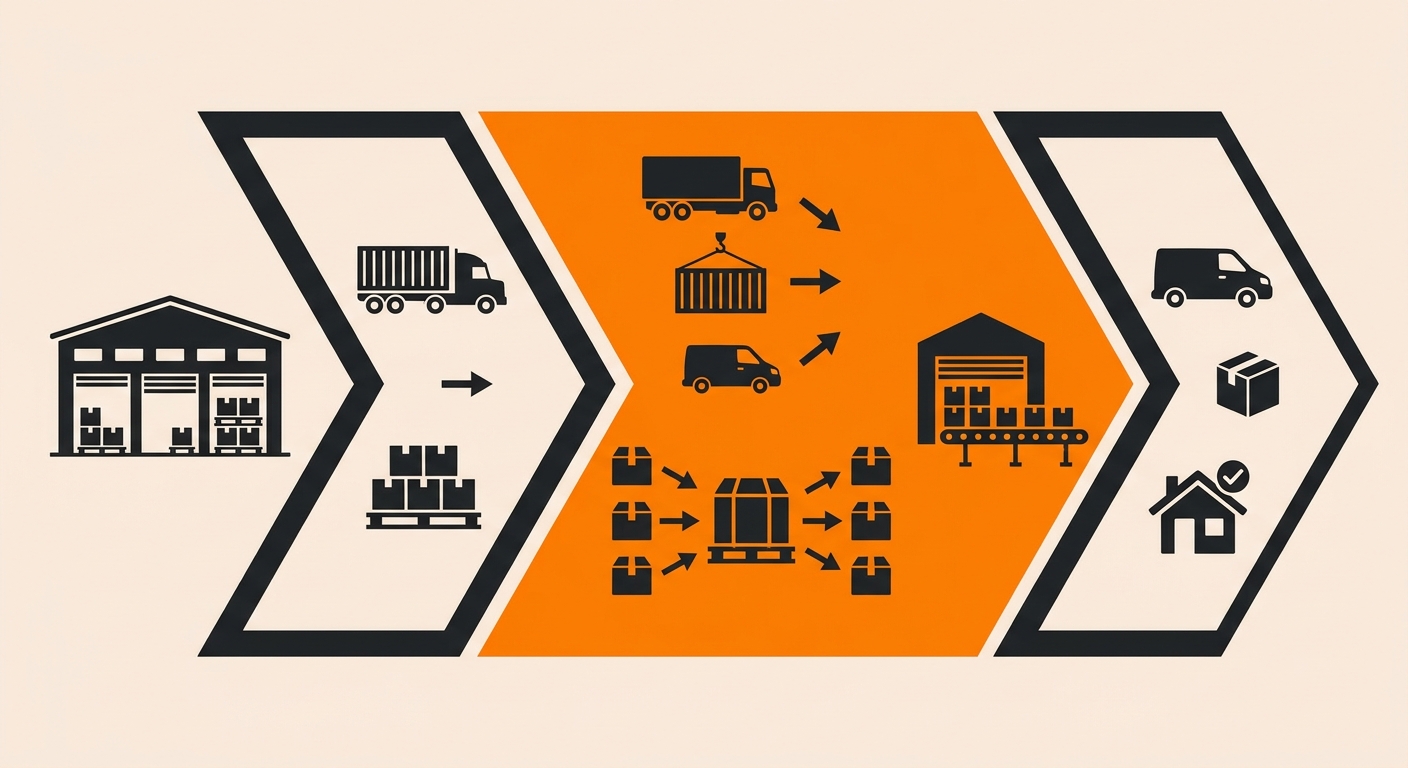
Middle mile logistics is the segment of the supply chain that moves goods from a manufacturer or origin warehouse to a distribution center, fulfillment hub, or regional sortation facility, before the final delivery leg to the end customer begins.
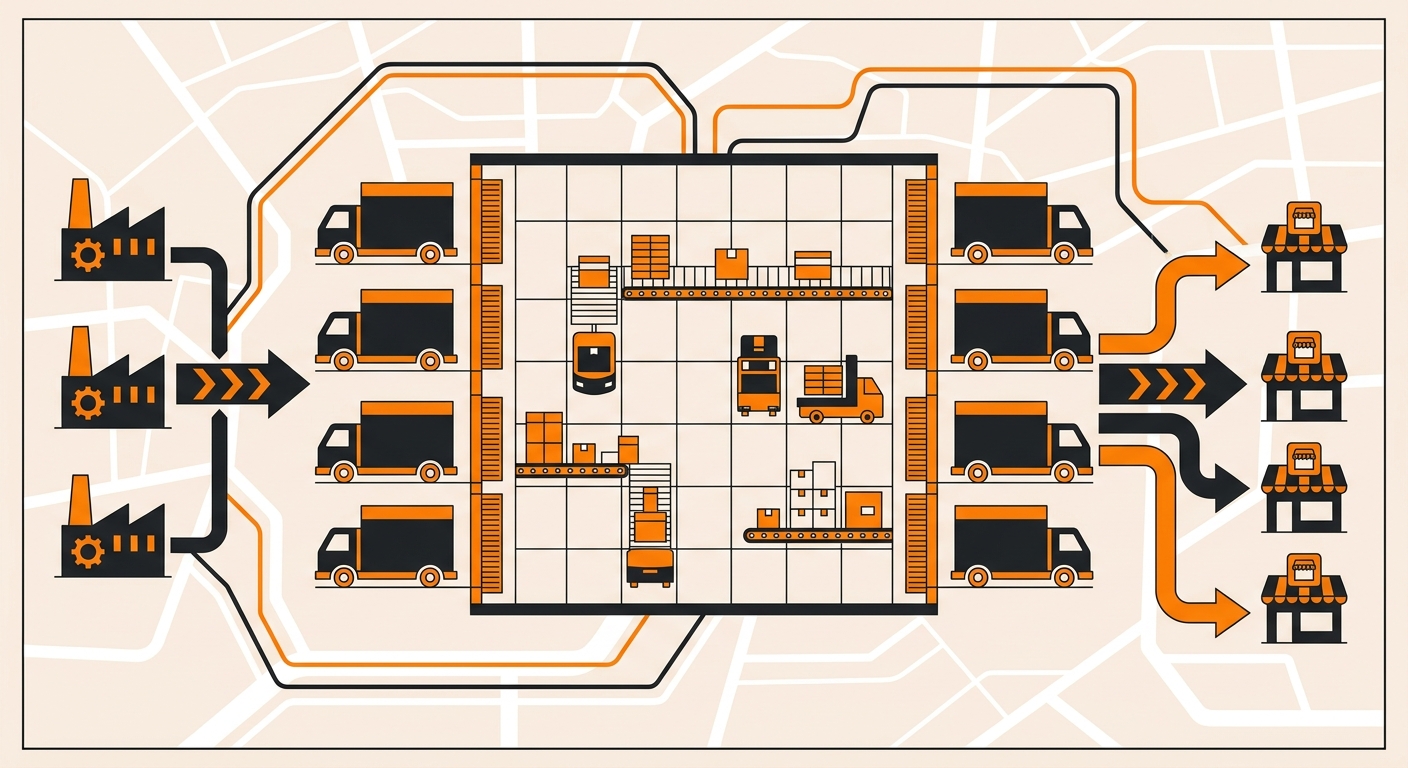
The middle mile is where speed, cost, and inventory positioning are decided; by the time a package reaches a last-mile carrier, the outcome is largely locked in.
What Middle Mile Logistics Means for eCommerce Brands
If you’re running an eCommerce brand or managing a 3PL operation, you encounter middle mile every time inventory moves from a port or vendor to your warehouse. A delay here ripples directly into your order fulfillment SLAs downstream.
Understanding what is middle mile logistics matters most when you’re scaling SKU volume, adding warehouse locations, or sourcing from overseas suppliers where transit variability is high.
Why Middle Mile Logistics Matters for Your eCommerce Operation
Middle mile performance determines whether your last-mile carrier gets packages on time or scrambles to recover. When freight sits at a regional hub waiting for a missed transfer window, your dock-to-stock cycle stretches, your 3PL team runs behind on pick-and-pack, and WISMO calls spike.
Shippers who tighten middle mile visibility report a 20–30% reduction in customer service contacts tied to in-transit uncertainty.
The stakes sharpen during Black Friday peak, when carrier networks run at 95%+ capacity and a single missed sortation window can push delivery past your promised SLA by two or three days, triggering return requests and losing repeat customers.
How Middle Mile Logistics Works
-
Carrier pickup from the origin facility. A regional carrier or dedicated middle mile provider collects consolidated freight from the fulfillment center or supplier warehouse. At this stage, shipments are typically palletized and manifested, the OMS passes a shipment record to the carrier’s system, triggering a bill of lading and a tracking event.
-
Sortation at a regional hub. Freight arrives at a cross-dock or sortation facility where it’s broken down by destination zone. Automated sortation systems read barcode or RFID data to route individual cartons or pallets onto the correct outbound dock. This is where most transit-time variance gets introduced; hub dwell time can add 4 to 12 hours depending on volume.
-
Line-haul transport to the destination market. Sorted freight moves via ground trailer or, for time-sensitive lanes, air freight. The most common variant is ground line-haul; air is reserved for same-day or next-day SLA commitments where ground can’t close the distance.
-
Injection into the last mile network. Freight arrives at a delivery unit (a USPS sectional center facility, a carrier station, or a 3PL’s regional node), where last-mile carriers take custody. The handoff triggers a final tracking scan visible to your OMS and the end customer.
Key Components of Middle Mile Logistics
Regional Sort Centers
Regional sort centers are the physical nodes where freight gets consolidated, sorted by destination zone, and redistributed onto outbound lanes. Without them, carriers can’t batch shipments efficiently; every package would travel a unique, expensive path from origin to last-mile hub.
Line-Haul Transportation
Line-haul transportation covers the long-distance movement between sort centers, typically via full truckload or less-than-truckload carriers. This leg determines your transit time windows; a 48-hour line-haul run directly sets the floor on how fast last-mile delivery can begin.
Cross-Docking Operations
Cross-docking allows inbound freight to transfer directly to outbound vehicles with minimal or no storage time. It keeps dwell time under four hours in high-performing networks, which is the difference between hitting a two-day SLA and missing it.
Carrier Network Handoff Protocols
Handoff protocols govern exactly when custody and liability transfer between your 3PL, the middle mile carrier, and the last-mile provider. Gaps here, not the transportation itself, are where most shipment exceptions and tracking failures originate.
Best Practices for Middle Mile Operations
-
Audit carrier transit times against your fulfillment SLAs every 90 days; rate cards change and so do lane performance benchmarks.
-
Avoid routing all middle mile volume through a single carrier; diversify across at least two regional partners to protect against capacity shutdowns during peak season.
-
Negotiate hub-to-hub consolidation windows in advance, not reactively, so outbound freight moves on a predictable schedule rather than ad hoc.
-
Track dwell time at cross-dock facilities separately from in-transit time; conflating the two hides where delays actually originate.
-
Set a hard threshold (48 hours is standard) for exception alerts on shipments that miss a sortation scan, then escalate immediately rather than waiting for delivery failure.
Partner With Fulfyld on Middle Mile and Beyond
Building a fulfillment operation that executes well, across carriers, sortation hubs, and delivery windows, is where most growing brands hit a wall.
Fulfyld manages the full fulfillment chain, from inbound receiving through last-mile handoff, so your middle mile isn’t a blind spot.
You keep your focus on growth; Fulfyld handles the logistics infrastructure behind it. Get a consultation today.